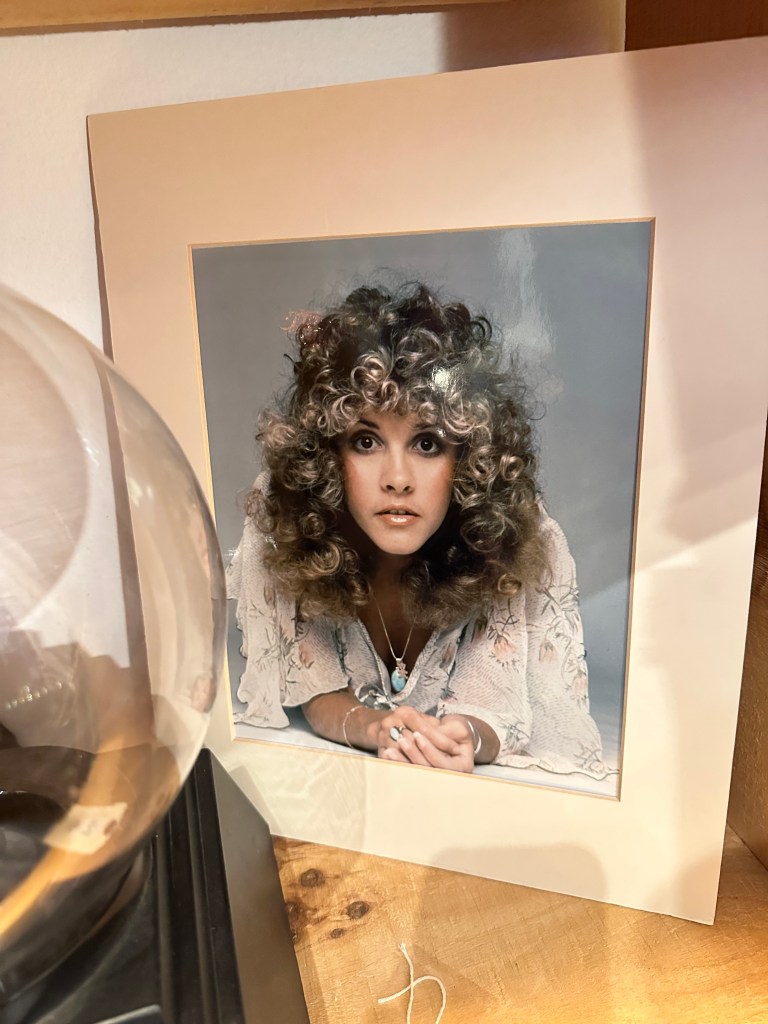
Daughter (10 years old): “Who’s that?”
Me: “That’s Stevie Nicks!”
Daughter: “Oh he looks like a girl.”
odd duck
Daughter (10 years old): “Who’s that?”
Me: “That’s Stevie Nicks!”
Daughter: “Oh he looks like a girl.”
I must confess (though to do so is to slash
At my own grapevines), we poets often do
Great harm to ourselves — for instance, when you’re weary
And distracted and we bother you with our poems;
Or when our feelings are hurt because a friend
Is brave enough to criticize so much
As a single line; when, uninvited to do so,
We recite all over again a poem or passage,
One of our own, that we’d just got through reciting;
When we lament the fact that people never
Notice how hard we work to create our poems,
So finely drawn, so elegantly spun out;
And when we hope that the very minute you hear
That we are poets you will summon us
Into your presence, command us to write poems,
And forbid us to be poor.
– Horace (as translated by David Ferry)
Gods want offerings. In almost every myth, in almost every religion, the gods seem to have an eager appetite for offerings from humans, and usually there is the hope that the gods will give something in return. They don’t always, but that’s those mysterious gods for you! Whether they’re the capricious gods of Olympus, the totalitarian Yahweh in the Kingdom of Heaven, or the omnipresent spirits of animism, they all want humans to offer something of themselves, and in reciprocation the gods might be inclined to grant some sort of boon.
Reserve some of your crops for the spirit of the harvest in the hopes you won’t starve. Sacrifice a human life to the volcano so maybe it won’t erupt in anger and kill us all. Send your checks to the televangelist to increase the chances that God will favor you with riches. Maybe!
This ambiguity of outcomes is important, because a god requires some wiggle room to account for all the times it fails to deliver. Ah, you didn’t give your best crops, so there was a drought and we all starved anyway. The human thrown into the magma wasn’t actually as innocent as we thought, so the volcano erupted and killed us all anyway. You didn’t give quite enough of your life savings to the televangelist (did you really need to send your grandkid that birthday check?), so God kept you poor anyway.
It’s important that a god’s followers remain fuzzy as to what the god specifically seeks in order to win a particular blessing. It’s all trial and error, but the people we sometimes refer to as priests believe (or claim) they can divine what a god truly wants, and followers trust their clergy to get them pointed in the right general direction. But even the priests don’t know for sure.
In Anne Leckie’s wonderful novel The Raven Tower, some of the main characters, including its narrator, are gods. They vary in their relative size, influence, and power, but they can increase that power through humans’ offerings. If you, as a god, can get a small band of hunter-gatherers to make some modest offerings to you, you suddenly find you have more god-fuel to exercise your abilities and, perchance, do nice things for your followers (if that’s what you want to do). There’s a bit of a quid pro quo and a virtuous (or vicious, depending on your point of view) circle. The more the mortals perceive you to be bestowing gifts upon them, the more they’ll be inclined to keep the offerings rolling in. (And if it was just happenstance that their crops flourished that year, and it had nothing to do with you, well, that works too.) If you can get an entire continent teeming with humans to dedicate temples, shrines, prayers, and sacrifices to you, well then, you’re probably becoming a pretty big, badass deity, perhaps strong enough to fight and destroy rival gods.
The catch is that the gods of The Raven Tower always have a limited pool of power from which to draw. A super-god who gets plentiful offerings from hundreds of thousands of humans might be seemingly invincible, but wielding that power—by waging a war, making massive changes to the environment, or bringing things into being from nothing—drains those resources. A super-god who squanders its power, its “God Points,” can become a puny sprite rather quickly. Think of it as your “magicka” bar in a role-playing video game. You can cast your most powerful spells to inflict incredible damage upon the boss of a dungeon, but you’ll need to replenish that magicka resource before you can do it again. And while you’re waiting to be refueled, you’re probably rather squishy; that is to say, vulnerable.
If one does not believe in any gods or other supernatural entities, it’s easy to begin reading something like The Raven Tower, or look at real-life flocks of worshipers, and default to an attitude of superiority or condescension. Ha, well, it’s a good thing I don’t believe in any gods, and I don’t have to sacrifice anything to some unseen being in the mere hopes of a possible boon that may or may not ever come!
But of course, gods are not the only invisible forces to which we mortals make offerings in hopes of securing blessings.
You can probably think of several examples of possible substitutes for gods: ideas, institutions, or principles to which we give and give without ever really knowing for sure whether we will receive any reward or salvation. An easy example is The Market, complete with its “invisible hand,” busily fussed over by economist-theologians and investor-priests who advise us as to what The Market “wants” so that we may partake in its bounty. And if we fail to fully surrender to it, if we waver in our faith in The Market, the system will collapse.
It’s not too different from making pleadings and promises to Fortune with her wheel or, more contemporarily, “Lady Luck” when one has placed a massive financial stake (a sacrifice) on the next card that is dealt, the next pull of the slot machine’s arm, or the next roll of the dice.
In popular fiction and quasi-secular cultural practices, belief and worship are common sources of nourishment for god figures. In the children’s film The Rise of the Guardians (and its source material, the book series The Guardians of Childhood), the god-like beings that represent holidays and milestones, such as Santa Claus, the Easter Bunny, and the Tooth Fairy, are powerless without the belief of children to keep them alive. Even Peter Pan’s Tinkerbell, a minor deity all things considered, needs us to believe in fairies.
Perhaps most salient for the point I am laboriously trying to make: In Neil Gaiman’s novel American Gods, in which the old gods of mythology (Odin, Anubis, Czernobog, and such) are threatened by the modern gods of technology and mass media, they too feed off the belief, worship, and sacrifices of humans. Gaiman’s New Gods are the closest analogue for what I posit has become the newest pantheon for our age: social media.
I had been enthralled by the idea of being an Important Person on the Internet from the moment I got a 2400 baud modem in my Packard Bell PC in 1990 or so at about the age of thirteen, when I wrote passionate album reviews on my friend’s local bulletin board system (BBS) in Southern New Jersey. I was an enthusiastic user of the early Prodigy online service, a sort of proto-AOL, where I roleplayed a character on a Ren & Stimpy–themed Star Trek board. When America Online took over, I spent hours in chat rooms, making connections with strangers over our love of Pearl Jam and the musical Rent. At school, I was mocked and bullied on a daily basis, persuaded that my existence was not only unjustified but an abomination, an affront. On these new digital platforms, however, I could present myself however I liked, have my preferences and obsessions validated, and feel like I belonged.
As an ostensible grownup, I have written thousands of blog posts and contributed to several well-known outlets. I have started dozens of websites and a handful of podcasts. I have written and recorded dozens of songs and put them online to be bought, downloaded, and streamed. I have uploaded scores of videos, self-published an ebook, and emitted well over 100,000 tweets (and I am now also tooting on Mastodon). I have Dubsmash’d, Vine’d, Tumblr’d, Meerkat’d, Periscope’d, Twitch’d, Substack’d, and, yes, I have TikTok’d. I have even Google Plus’d, Wave’d, and Buzz’d. In other words, I have poured unfathomable effort and years of my life into generating content, without compensation, for consumption on the internet.
Why? None of it has made me rich. None of it has justified my existence.
Let’s get back to the whole social media pantheon thing.
I say unto you, there is a Twitch god. There is a YouTube god. There is a Twitter god (at least, as of this writing there still is). And so on. Maybe each platform has several gods attached to it. For example, maybe there’s a god for the “Just Chatting” Twitch channel and a god for Fortnite streaming. Maybe there are separate gods for ASMR YouTube, unboxing YouTube, and cat video YouTube. Perhaps there is a journalist Twitter god, a college sports Twitter god, and a MAGA Twitter god (though that one might be a bit too literal).
Harken unto me. With every selfie we post, every sub-256-character joke we tell, every rant we vent, every second we livestream, every retweet, like, upvote, and upload, we are making an offering to the gods—we are offering ourselves to the gods. We are sacrificing pieces of ourselves to those unseen forces that we believe control our destinies.
We may not give them our crops or our corporeal bodies, but we do give them those things we value most and have in vanishingly limited supply: our time, effort, creativity, and attention. We offer our stories, identities, preferences, connections to others, longings, fears, and secrets. That’s what makes it a sacrifice. Every stream is an offering. Every tweet is a prayer. Every time we hit “send,” “publish,” or “upload,” we are casting our lots with The Great Algorithm and feeding and refueling those gods.
And the priests—sometimes we call them “influencers”—try to guide us, to show us how best to maximize our relationships with those gods. They can’t make any promises! We know the false prophets by their claims of “10,000 followers overnight!” The real holy men and women can only tell us what they have learned from their years of scrying, exegesis, and, yes, sacrifice, and we can choose to follow their lead or not. But we can never know what constitutes enough. We can never be sure whether an offering will be accepted and what blessing, if any, will be granted. Remember, the fuzziness, nebulousness, and wiggle room are part of the bargain.
Sounds like a bum deal, doesn’t it? And yet, for so many of us who are fully aware of this maddening ambiguity, we nonetheless pray harder and offer more and more of ourselves. “Favor me!” we cry.
What do we want? Some want fame and fortune. Seeing as how some people have indeed achieved this through social media, we know it to be possible. Some want to become priests themselves, to be shepherds to those who were once, like them, lost. Some want to right an injustice or defeat an enemy, and each prayer or offering is akin to a complaint to the manager or a report to the principal: Did you know what that person just did? We demand they face your wrath in retribution!
I suspect that many supplicants simply want to feel like they matter. They seek to justify their existence. I know I have sought to justify my existence. What more important question does anyone ever ask of a god than Why am I here? And while an answer in plain language never comes, we do get to examine the entrails, read the tea leaves, sift through the sands, and decipher the runes by poring over the metrics of retweets, shares, likes, follows, upvotes, and subscriptions. We never know what constitutes “enough,” what follower count or what ratio of replies-to-retweets equates to an existence justified. But we keep offering and praying all the same.
Now you might expect me to talk about how I, and all of us, need to stop this nonsense, how we all need to wake up and realize, wait a damn minute, there are no social media gods, and we sure as hell don’t need them to tell us we matter! And that is entirely correct; we don’t need them.
Because if—as in stories such as The Raven Tower—the gods have a limited supply of power, a pool of magicka that can be spent, it means they are not invincible.
Sometimes, these gods can grow overconfident and expend enormous quantities of their god-fuel on misbegotten notions and ill-advised efforts to expand their domain and overpower their rivals. Perhaps one could say that in selling itself to Rupert Murdoch, MySpace cast too vast a spell too soon and exhausted its magica, just as Facebook gained tens of millions of converts. Now the once-ubiquitous “Tom” avatar is relegated to the ranks of old idols that today we wonder why we ever used to believe in. A few short years ago, scandals about Facebook’s handling of misinformation and users’ personal data revealed the god’s hubris (and that of its Arch-Patriarch Mark Zuckerberg), and a crisis of faith ensued. Today, Meta—the Holy See of the Church of Facebook—is in the process of expending massive resources on its conception of a virtual-reality “metaverse,” and one wonders if such a gambit, should it fail, might result in a greatly diminished deity.
Their own follies aside, we of the flock (also known as “monthly active users”) actually possess the surest means of liberation: we can simply refuse to feed them. What would any social media platform be without millions of real people freely supplying them with a raging river of content? There would be no Facebook. There would be no Twitter. There would be no Twitch. Yes, we can choose to starve these rapacious gods of their ill-gotten sustenance, and in so doing, free ourselves. We can diminish them to demigods or imps, such that they can no longer control or influence us or the world. They can be wished out of existence by our determination to ignore them.
Or?
Now, this might sound a little odd coming from the editor of a secular humanist magazine, but I sometimes wonder if it might not be better, for me anyway, to just, well, go with it. To own it. Maybe there is more serenity to be had in conceiving of these unknowable paths to personal validation as actual gods, beings with wills and agency, to be appeased and beseeched. Maybe if I stop thinking about whether real people—with their full lives and limited time and attention—are bearing witness to my efforts or assuring me that I belong to the human family, and instead think of these platforms as fickle supernatural forces, the sound of crickets won’t feel so personal. The unanswered prayers won’t feel like a rejection by the earthly tribe but by an unknowable force from beyond reality that none of us can truly comprehend.
The ways of the gods are, after all, mysterious. It’s impossible to know with any certainty what they really want. We mere mortals can’t be expected to divine their cosmically vast thoughts.
Best I don’t try, then, and just keep offering my rain dances, mantras, and hymns. And like Skinner’s pigeon, when a blessing befalls me, I’ll believe I have pleased the gods and that I’d better do that thing over and over again.
You can’t make other people like you. But a god? That might be doable.
This article originally appeared in the February/March 2023 issue of Free Inquiry.
“Running Gag”
An original song by me, Paul Fidalgo.
Lyrics:
Alright, you know, how on Saturday Night Live they tell a
Joke, a lot, until it isn’t funny anymore
Well that’s as good a way as any to tell
You about myself and how I manage to
Relate to those unfortunate enough to find
Themselves involved in intimate relations with a
Man who can’t assemble a coherent personality
I guess that what I’m sayin’ is I’m a
Punchline
A solid bit
An easy laugh
I can be your running gag
Hold on, I think that I just caught you crack a
Smile, a ray of hope that tells me that you might look
Past the crap and understand the little boy who
Had a lot of trouble making friends, okay
I’ll stop, you’re right, it’s probably too early to
Begin to dump the bullshit that I put up with when
I was twelve, but it’s kind of important if you
Want to know more about me than that I’m just a
Punchline
A solid bit
An easy laugh
I can be your running gag
I’ll slay the crowds
I’ll impress your mom
I can be your stand-up man
And I promise not to cry
In front of you
Refresh my brain, what is it we were just talking
About? Oh yeah, I was going on about how
I can use self-deprecating humor as a
Way to hide, but we can change the subject but
Before we do I just want to be clear that I am
Not a nut; a little on the spectrum but I
Swear it’s not something you need to be concerned
About. Just keep on telling yourself that I’m just a
Punchline
A solid bit
An easy laugh
I can be your running gag
I’ll slay the crowds
I’ll impress your mom
I can be your stand-up man
“Jut”
An original song, written and performed by me, Paul.
Lyrics:
Back when I was lonely oh I could not comprehend
Why my species had decided that I was not one of them
Got my diagnosis and I wrestled with my pain
I made friends with my weirdness, now I’m lonely just the same
But perhaps I only serve as a reminder of the truth
That not everyone is beautiful or revels in their youth
And while no one will admit it we all feel it in our guts
That while all the pieces fit so nicely
All I do is jut
I don’t know who to talk to and I don’t know who to trust
Though I’ve tried to imitate the moves the TV said I must
The glow from my small candle tells the world what I’m about
But its light reflects and redirects to something sticking out
Now I try to take into account my old proclivity
To presume that anybody’s given any thought to me
And I know that to all thoughts of hope my mind has long since shut
But that filthy fucking fact remains that
All I do is jut
Like a sore thumb
Now I’m a tolerable person, by now I’m sure you’ve found
And you can have a beer with me when there’s no one else around
But I will understand it when your real friends arrive
If you excuse yourself politely and pretend I’m not alive
I could be a great companion, and a true friend to you all
But no one responds to questions or will answer when I call
Oh how much I’d love to reach out and pull myself out of this rut
But your averted gaze confirms that
All I do is jut
Like a sore thumb
“Irregular Heart”
An original song, written and performed by me, Paul.
Lyrics:
Nearsight unseen
Our vitals had been phoned in
When you chose me and I chose you
Tonight it seems
I’m down to my last moment
Before this dream
Resolves into a dew
Negotiating terms in our parlay
You’ve taken all my crimes into account
I strain my ears in hopes I’ll hear you say
You’ll measure out our days by keeping count
By the beat of my irregular heart
A swarm of souls
But you stand out like a statue
It’s hard to spot the cracks within the stone
The storm, it swells
But I’m too small to catch you
And now you lie in pieces there alone
But I am here to make it all okay
Your fragments I will bring in from the cold
And when you’re reassembled, will you stay?
You’re not the same, at least now you are whole
With my irregular heart
The time signature is wrong
Maestro breaks his baton
Phrases as frenetic as a moth’s flight
The pattern’s hard to see
But soft, and listen patiently
To a love so true
That you
Could set your watch by
You caught me flinch
When you were standing right here
The kind of clue you prayed you’d never see
You took an inch
But I offered you a light-year
You’ll be damned before you let me in that deep
I know you don’t want me to get this way
But I sense your affections moving on
I must believe this love is still in play
It’s your heartbeat that makes this sound a song
With my irregular heart