Of course they’re all infected. Honestly, how could we have expected anything else? If you deny the severity of a viciously infectious disease, if you delight in flouting all measures to prevent its spread, and you spend each day interacting with hundreds of people — all of whom agree heartily with your denial and flouting — of course you’re going to get the goddamned virus.
In the course of just a handful of weeks, we’ve had all these “bombshells,” and I know I have been unable to withstand the psychological and emotional shellacking of it all. Less than a month ago, we learned that Trump knew — and personally accepted the fact — that the coronavirus was deadly serious. A few days later, Ruth Badger Ginsburg died, followed by the nomination of Amy Coney Barrett to replace her. A few days after that, the New York Times released its major story on Trump’s taxes, where we learned about his avoidance of taxes and his gobsmacking financial losses and debts. A few days after that, we endured the 90-minute trauma that was the presidential debate, where we learned that Trump was absolutely not going to concede the election if he lost, and that he was encouraging white supremacist violence. A few days after that, we learned that he, his wife, several of people on his staff and in his campaign, two U.S. senators, and others who had been in contact with him, had been infected.
All this we learned. All this shocked us, roiled us, and caused varying degrees of anxiety, horror, and panic.
But I am just now realizing, really, we have learned nothing. And nothing has changed.
Let’s jump back to 2016. You know, how all the polls were wrong and Trump pulled out a surprise victory? The polls weren’t wrong. The results of that election were absolutely in line with what the polls were showing. Nothing weird happened. Voters who leaned Republican voted for the Republican, voters who leaned Democratic voted for the Democrat, and the results for each state more or less wound up well within the margin of error. In terms of consequences, the election of 2016 was monumental. In terms of probabilities, it was unremarkable.
Trump himself is figure of unprecedented abnormality for his position. So his behavior has roiled the collective psyche of the nation, pummeling us all out of any sense of time or orientation. But he is not magic.
The polls for the 2020 presidential election have been almost freakishly stable. For months, Biden has polled just above 50 percent, and Trump just around 42 or so. Even after the aforementioned events of September beat us all about the head, the polls remained eerily static. Why?
It’s pretty easy. It’s really obvious who Trump is now. After four years of him being president, you didn’t need to think too hard about whether you liked how it was going or not. He made it really easy. He faced his most important test in having to deal with a pandemic, and there was no getting around it, so if you were at all on the fence about him, his handling of COVID-19 probably gave you your last push. There’s nothing new to learn. People have settled on their preferences.
But what about this crazy month? Well, no one really thought that Trump didn’t believe the virus was serious. It’s news that he was stupid enough to say so to a journalist while being recorded, but it’s not surprising. Everyone already knew that Trump is a cheat, and that he’s avoided paying taxes. Indeed, he’s boasted about his ability to evade them. It’s also well known that he’s been a colossal failure as a businessman. He’s been siding with white supremacists for ages, publicly. He threatened to contest the election of 2016 if he didn’t win. None of this is new.
And now, he gets COVID-19. It’s “shocking” in the sense that it’s the President of the United States, and that’s just a de facto big-goddamn-deal. But, you know, come on. Of course he was going to get it.
After four years of Mussolini-But-Dumber, people know what they got. If they love it, they love it, and that’s all there is to that. The rest of us — most of us — don’t, and we’re going to vote him out of office. There’s nothing weird about that, either.
We may feel as a nation that we’ve been batted about like a cat toy, but it’s the same cat. It acts like a cat. It doesn’t grow wings or breathe fire.
Just like the 2016 election, the 2020 election just might be (and I can’t believe I’m about to type this) a normal election with an abnormal candidate. A majority of voters will reject the president because he’s done an obviously shitty job and is an obviously shitty person. We know this because this is what the polls say is by far the most likely outcome. 2016 polls showed that Trump’s upset victory was entirely plausible. This time, he could still plausibly win, and it wouldn’t be a miracle if he did, but it’s just not where things are. Putting aside malfeasance, manipulation, or a mustering of forces to hold onto power (and I don’t necessarily doubt those things), this election is, in a way, like any other. It will revert to the mean.
Water seeks its own level. Viruses infect people who put themselves in a position to get infected. People in a shitty situation will choose to get out of it. Trump’s behavior, and now his health, are dangerous unknown factors. But everything else is, I am realizing, obvious.
Here’s a way for me to talk about my response to last night’s debate.
In the parking lot at the grocery store today, I saw a man, who appeared to be in his 60s, returning to his car with his groceries. He was wearing a shirt emblazoned with the Trump campaign logo on the front and “No Basement Joe” on the back.
Adjusting my face mask before walking into the store and catching sight of this fellow, my mind immediately recalled the depravity displayed by Donald Trump the night before at that horror-show of a debate. For a brief moment, my brain struggled to comprehend how anyone—including a presumably sane, sentient human being like the man in the parking lot—could witness the trauma Trump had inflicted on us all and still support him. Worse yet, this man was proudly advertising his continued devotion to the president the fascism-for-idiots he personified on that stage.
And in that moment, I felt hate for that man. To be clear: this was not okay. I know nothing about this person. Merely presuming that this man understands what Trump is and what he represents, I could come to no other conclusion that this man must be evil.
Of course, I have no idea if that’s so. I have no idea what this man is like. I have no idea what he knows and does not know. I know nothing of his life story beyond what could be gleaned by a few seconds passing in a parking lot.
It scares me, that I felt that way. But in noticing that sudden shock of hate in myself, I then considered how deeply and fiercely Trump and his cult have driven their followers to hate, and I became doubly frightened. I experienced a moment of hate, of indignant rage at the moral vacuum I assumed to reside in this stranger’s heart. Just imagine, then, the cauldrons of hate, like geological quantities of magma, seething within those who feel represented by Donald Trump.
For the few seconds that I burned, I struggled to come up with some imaginary scenario in which I might confront this fellow and set him straight. Absurd, of course.
But what about the millions of people, bubbling with hate, and being told to expect their enemies to deny their leader his power—and therefore, in their minds, their power.
I’m very worried about what scenarios they are imagining. I’ve very worried about that.
What I’m also thinking about:
How not to think about everything going on. M.G. Ziegler says, “I think in many ways we can only live through times like these by not stopping to think about them.” I don’t feel like I have that luxury.
So go easy on yourself. Try not to think about the future. Instead, think about the present. How can you win the next hour, the next day? How can you be of most value — to yourself, to your family, to your community, and to the earth itself? You still have the incorruptible capacity to create joy, and catalyze change. No one can take that away from you, no matter how dark they dim the lights.
That’s true. But while one’s capacity might be incorruptible, it is not inexhaustible. And I’m pretty exhausted.
I would ask you, dear reader, to remember the next-to-last thing that social media taught you to be outraged about. I bet you can remember only the last one. …
You can readily see, I suspect, how information overload and social acceleration work together to create a paralyzing feedback loop, pressing us to practice continually [informational] triage … forcing our judgments about what to pay attention to, what to think about, to become ever more peremptory and irreversible. … And all this has the further effect of locking us into the present moment. There’s no time to think about anything else than the Now, and the not-Now increasingly takes on the character of an unwelcome and, in its otherness, even befouling imposition.
“If we’ve learned nothing else from the past decade,” I wrote, “it’s that if Republicans can’t win through persuasion, they’ll simply rewrite the rules. They are eternally controlling Boardwalk and Park Place. It’s written right on the inside of the box, that they shall eternally passeth Go, over and over, forever and ever, amen.”
What I didn’t foresee — and really should have — was how overt the repeal of democracy would be. I think I imagined that most of the foul dealings would happen behind the scenes, in ways that politicos understood, but didn’t penetrate the national consciousness. Even the hypocrisy of the Republican Senate’s position on appointing a successor to Ruth Bader Ginsburg, while obvious, I suspect remains below the radar, and outside the realm of interest, to most Americans. I assume they see it as just another example of politicians being politicians.
But the President of the United States now says that any election that he doesn’t win is invalid. The election itself is moot, and he will use what influence he wields to ensure it. If he needs to use the Department of Justice to challenge the validity of mail-in ballots, he’ll do that. If he needs to disappear voters through the use of secret police, he’ll do it. If he needs to dispatch his cult of gun-toting fanatical ignoramuses to literally block the entrances to polling places, he’ll do it. If he needs to strongarm Republican governors and state legislators into disqualifying unfavorable slates of electors, he’ll do it. For each one of these actions, he has either already announced his intention to carry them out, or his minions have informed the press of the plan. Some of it already has happened.
It’s not a secret conspiracy. It’s out in the open. He intends no transfer of power, of any kind, at any time. Not in January of 2021, and almost certainly not in January of 2025 either.
In that same 2018 piece, I wrote that those who are really paying attention could sense what felt like an emergency. “It is an emergency. I do believe that people are waking up to that simple fact. Many millions of people have come to realize that things have not only gone wrong, but horribly, existentially wrong. The republic is in mortal danger, and the blight will not be contained within our borders. It’s soaking into the Earth’s crust. It’s riding the oceans’ currents. It’s attached to the very molecules we breathe.”
I said that I feared that our better angels are simply no match for our worst demons. But there, I might have been wrong. Not because I have any illusions that Republicans will discover a dormant conscience and put a stop to this madness. Rather, I suspect that our topple into fascism hinges not on the winner in the battle of angels versus demons, but because of the inaction of everyone in between.
Career civil servants will, by and large, do what they’re told. Mainstream news outlets will say and print what is necessary to keep from being shut down. Corporations will require the favor of the regime in order to continue operating and remain neutral. Some in positions of power will make noises about norms and democracy, but it will be just that, noise. You’ve heard it before; it’s the sound of senators tweeting about their “concern” about a grievous outrage and then doing nothing about it.
“Point me to the light at the end of the tunnel, and prove to me that the tunnel hasn’t already caved in,” I wrote then. “Because I can’t see it, and it’s getting harder to breathe.”
I could still be wrong. So I renew my plea from two years ago: If I’m wrong, tell me how.
Otherwise, I don’t know what to do with this, this knowing. I don’t know what happens next. I don’t know what to do now, nor what to do when what’s happened becomes obvious to everyone.
A million years ago, when I was attending the Actors Studio Drama School in New York, my class took part in a fascinating three-week workshop on performance in masks. While considered sort of avant-garde today, theatre more or less began with performers masking themselves or disguising their faces to tell stories. The classics of the Greeks and the slapstick buffoonery of commedia dell’arte were all originally performed in masks. The most common icon for theatre today is a pair of masks, one for comedy and one for tragedy. So this was going to be some exciting work in getting back to the roots of our craft, learning some vital fundamentals.
The sessions began even more fundamentally than we expected. To the surprise I think of many of my classmates, the first week’s session was absolutely free of masks. After a rather reverent introduction to mask work, we spent the rest of our time staring at our own faces in the mirror. Up close.
Literally face to face with ourselves, we were instructed to look deeply and coldly at our reflections. We were told to examine every line, curve, spot, and flaw with excruciating detail and meditative patience. We were made to drop all attempts at animation or expression, to let our faces find a state of absolute rest, to give up control of our facial muscles to gravity.
It was difficult and emotionally challenging, and yet we were to refrain from showing that emotion. We needed to simultaneously investigate our own faces with impartiality while also retaining mastery over them. This would be hard, I think, for anyone to do, but imagine the struggles of a room full of actors, all building their careers and lives on the imperfect, asymmetrical image before them.
As the workshop sessions went on, the reasoning for subjecting us to this became clear. Before we could ever be allowed to put on a mask, we had to reckon with the ones we were already wearing.
It’s a cliche to say that we all wear a mask to some degree, actors and non-actors alike, but it’s also true. The metaphor of the mask has special resonance with me, not just because of my life as an actor, but for the masks of normalcy that I have shielded myself with for decades. I won’t recount all the ways in which I am an odd duck, but consider the utility of “masking” for someone who has always been small, anxious, and awkward, creative and highly sensitive, bullied mercilessly in childhood and subject to other traumas in adulthood, and, for the kicker, on the autism spectrum.
Particularly since being diagnosed with Asperger’s only a few years ago, I have been working very hard to deconstruct those masks, to peel them away, layer by layer, and discover who the person behind them actually is. To pass as human had been the enterprise of my life, and over time it exhausted and sickened me. I lost myself within those masks, and I was terrified of who I’d find once they were gone.
I didn’t need to be. Here I am in my early 40s, getting on just fine, all things considered. It was enormously difficult, but I have learned to accept a great deal about who I am and who I never will be. I have grown to appreciate things about myself I never allowed myself to before, and I’ve acknowledged ugly truths about myself as well.
But just as I miss my life as a professional actor, taking on roles and living different lives, sometimes I miss the masks. Just as a costume can help bring an actor more fully into the mind of their character, a metaphorical mask allows a person to adopt qualities they might not otherwise possess. A personality enhanced by a mask may not be “genuine,” but is it necessarily false?
As part of coming to terms with my true self, I’ve had to accept and own my introversion and social awkwardness. But in the areas of my life where more confidence and gregariousness are called for, as in many work-related situations, am I better served by resigning to my “true self,” or might it be warranted to augment myself with the traits necessary for success? In other words, if I’m shy, but I decide to pretend to be outgoing, am I betraying myself?
A few years ago, I might have answered yes.
Part of the work of self-acceptance has been to insist on that same acceptance from everyone else — not for my own validation, but to be able to present myself truly, as I am, without the need to excuse or apologize for who I am. It’s been an essential part of this journey.
But that doesn’t mean that my “true self” always serves me best. An easy example of this comes from parenting. While I am very honest with my kids about who I am and what I’m like, there are always going to be moments when I am doing my duty to them as a father by presenting to them a person who is stronger, more assured, and wiser than I know myself to be. This isn’t to fool them, but to give them the care or the example they need in that moment. It’s not false, but it is a kind of mask.
And of course, there’s work, as I mentioned. As a communications professional, I can only achieve so much with creative-but-anxious, and I fail my employers if I shrug and say, well, this is who I truly am! Like an actor putting on a costume and reciting lines written by someone else, I have to put on my mask, the one that represents a character that is more confident and assertive than the real person wearing it.
This is a case of mask-as-augmentation, and I think it’s distinct from mask-as-shield. In a less self-accepting time, my masks were ways to hide who I was, to defend myself from being identified as different, to thwart anyone’s attempts to scrutinize my true self.
A defensive mask is always ill-fitting. It slips off too easily, or else constricts one’s circulation. The eyes don’t line up with the holes, or it makes it hard to breathe. To wear a mask defensively is to be in a constant state of disaster-aversion.
The relationship changes, I think, once we’ve come to accept our true face, when we take ownership of who we really are, for all our flaws. If we can get to a place where we have a handle on the whole of ourselves, strengths and weaknesses together, I think then a mask is not necessarily a shield or a disguise, but a tool.
If we mask with intention, we can thoughtfully and deliberately augment ourselves to better navigate different situations. When our natural state isn’t suited to a meaningful undertaking, we can choose the mask that supports our goals, adopting the specific qualities that help us get where we need to go, or build what we want to see come into being.
This is what we were learning in those first hours of that theatre workshop. Before the instructor would allow us to put on one of the masks she’d brought, and begin to inhabit — and be inhabited by — the character the mask represented, we needed to accept and master our own faces. We needed to take off our defensive masks, stop hiding from ourselves, and see our true faces as they really are.
To have used those masks as disguises would have been to miss the point. The goal must never be to disappear. Rather, the mask allowed us to bring something new into being. The mask was not hiding our true selves. Our true selves were giving life to the mask.
Accepting who we really are is just the start, not the end. Self-acceptance isn’t about stasis. It’s about taking responsibility for who we really are, and with intention and new understanding, finding the strength to see what else is possible. One way to find out is to try on a few masks. Who knows who might show up.
I have this idea about the relationship between courage and laziness.
Courage, as I define it, is when a person acts out of principle, knowing that the act will cause them suffering. John Lewis knew he faced beatings, imprisonment, and possibly death when he marched. Susan B. Anthony knew she faced scorn, jail, and infamy if she cast a vote. Steve Rogers knew he’d be blown to bits when he leapt on that grenade that turned out to be a dud. (Fictional examples are helpful and illustrative so back off.)
I have lamented on countless occasions my inability to choose a Major Project of some kind and see it through to fruition. (One Major Project I actually did, finally, complete, and I will eagerly share it with you when it comes into full being sometime next year.) I’d like to write a novel. I’d like to start a theatre troupe. I’d like to write nonfiction books on a number of subjects and in a number of styles. I’d like to host a podcast, write and record an album of new songs, play my music live for audiences, get into voice acting, write a newsletter, make a satire news site, and so on.
Rarely do I even begin on these fantasy projects, let alone stick with them long enough for them take flight. Why?
Sometimes, a project just isn’t the right fit. It doesn’t interest me as much as I’d hoped, or it involves commitments I am simply incapable of making. That’s no reason for anyone to beat themselves up. I mean, I will still beat myself up about it, but I shouldn’t.
But more often than not, I think what holds me back is what I’ll call laziness. That might not be an entirely fair word to use, but I want to make a point. When evaluating a Major Project, any number of factors can weigh on my mind and convince me it’s not worth beginning, or not feasible. It could be that I don’t think I have the time, or that I don’t really know how to get started. It could be that I don’t see a market for what I’d offer, or that said market is already flooded. It could be that it would require that I ask for help or collaboration with others, possibly even strangers, and my intense wincing at the thought of being socially entwined with anyone drains my resolve. It could be that I perceive that it would require a financial commitment that I can’t make, or am unwilling to try to fulfill.
All of these are justifications for inaction. Reasons not to start. Reasons not to try. Some of them might be really good reasons! Some of them might be sober and realistic assessments that lead to the reasonable conclusion that something is just not worth taking on.
Some. But not most.
Mostly, they’re about unwillingness. A lack of will, all because of an imaginary cost-benefit calculation that I have made based on a slew of unknowable factors. It’s bad math. And because the result of actually making the effort to see something to its fruition is more likely to be a valuable end in itself, regardless of anything else, it really is, for lack of a better word, laziness.
To take the first step in a new enterprise, and then to take as many additional steps as possible, is an uncomfortable thought. And each step brings with it the possibility of stubbing one’s toe, tripping, or stepping on a rake. One could take a few steps very awkwardly and wind up looking ridiculous for several paces. One could walk for a very, very long time and get very, very tired, or run out of energy entirely and collapse to the ground. One could even reach the ultimate, dreamed-of destination and find that it actually kind of sucks there. All those things could be true, and most of them almost certainly will be true.
Then what is required to do it anyway? Courage. To undertake an action of importance even though we know that a lot of the experience will be negative, even though we might not even finish it, even though what we make in the end might be kind of crappy. To work in spite of those possibilities takes courage. To put aside precious free time and resources that we may never get back takes courage. To allow oneself to be vulnerable and entreat others for help and collaboration is risky and, to me, terrifying, and it takes courage.
There is the moment, at the point of a major crisis when it can no longer be denied, and must now be accepted as a new part of our everyday reality, that we tell the kids that everything has changed.
I didn’t have children at the time of the 9/11 attacks, but I can imagine that parents of young kids at the time had to find that right moment to explain what had happened with those planes, and why everyone was sad, scared, and angry. All of a sudden, everything was different. So much so that the kids needed to be sat down and told so in serious yet reassuring terms. I don’t know, of course, but I can guess.
I am a parent of young kids now, when the COVID-19 pandemic has really, truly changed everything. 9/11 probably didn’t fundamentally alter anything about kids’ lives back in the early 2000s, but the pandemic has utterly upended the lives of today’s kids, and it shows no signs of stopping any time soon. When schools shut down last spring as the virus broke loose, in a United States too stupid and delusional to even acknowledge it, the everything-has-changed conversation was inevitable.
My own kids had known that something called the coronavirus existed, and it sounded scary, but they had been reassured countless times that, while it was a serious problem for many people, it was not something that was likely to affect their lives or put them at any risk. I strongly suspected I might be wrong about this when I said it to them, but I didn’t know. Americans had largely avoided any upheavals due to the first SARS, West Nile Virus, H1N1, and Ebola, so it seemed like a safe bet that we’d be alright this time too. Ha.
Those several conversations with my kids over a period of weeks and months, about how they wouldn’t be going back to school for the rest of the year, about how there would be no summer camps or activities, how they couldn’t go and be with their friends, how we couldn’t bring them into the grocery store with us, how money was suddenly tighter and we wouldn’t be ordering pizza as often, and how they would be entering into a weird new quasi-school situation in the fall, they all bore the weight of that central premise: everything was different now.
Here’s the part where I admit to something uncomfortable. I genuinely regret all that my kids are losing and missing during this pandemic, and I grieve for the millions of souls lost or made to suffer from this disease. But I also felt (and, I suppose still feel) a certain twinge of satisfaction as I delivered the news of a New Normal to my kids. I think it’s because I know that the world desperately needs a new normal, a realignment of what we value and prioritize, a sober and clear-eyed look at the absurd fragility of our society. Maybe this pandemic would give our shallow, boorish culture the chance to reevaluate what really matters.
That’s not all. On a much more selfish level, I actually like some of the changes to interpersonal interaction that the virus has necessitated. I’m a severely introverted autistic with Asperger’s, I already work from home, I have little desire for travel, and I don’t have any meaningful non-familial connections that live anywhere near me. My pastimes of choice do not involve me leaving my home. The situation to which everyone else was suddenly struggling to adapt was already my comfort zone.
As I’ve written previously, I even have a soft spot for face masks, as they further anonymize me to a species that has consistently shown me that I am, at best, merely tolerated.
It’s more than that, though, because I have to hope that after such a major disruption of everyday life for an entire society, some reconsideration and recalibration will have to occur. There must be a new way of being that emerges from a disaster that is largely and plainly of our own making. If nothing else, perhaps we would experience something akin to the classic tech support cliché: we turn the whole thing off and then turn it back on again. The reboot clears away the cruft and bugs, giving us a clean slate and a fresh start.
But now, I don’t know.
Freddie de Boer recently wrote about “romanticizing the post-apocalypse,”similarly hoping for something valuable to emerge from the chaos and death. “What I do want is some sign that we have reached a break, that events have forced us to face up to an old then and a new now, and that the tyranny of normal has been defeated at last.”
But like me, he is skeptical. “What this virus has taught me is the supreme durability of normal, the dogged survival of the mundane world, the near-impossibility of some new era in which all old expectations of civility and social norms will just extinguish or burn away…”
This is indeed what I see. While the pandemic has certainly brought out the best, most charitable, and most empathetic selves in many of us, I think for most Americans, it has simply been a pain in the ass that we need to be done with as soon as possible. Not, I should say, as soon as is best, or as soon as it’s safe, but just, like, now. This is obviously the mode of the utterly corrupt Trump administration, and we see it all the time in the outrage-inducing stories of churches flaunting social distancing rules or stupid teenagers mass-infecting each other at parties. But it’s more insidious than that, more subtle.
It’s in the insistence that we shove our kids back into classrooms rather than decide as a society that we should just pay people to stay home. It’s the delusions about how death statistics are being exaggerated (they’re not), how kids are magically resistant (they’re not), and the absurd tribalization of mask wearing.
It’s in the excuses we all keep making about who we imagine it’s safe to congregate with, because they’re family, close friends, or just people that we somehow simply know have been safe and surely aren’t carrying the virus (and, of course, neither are we!). I’m sure I’ve done it, and I bet you have too.
And yeah, it’s in the polls that show that despite the mass death, suffering, and economic calamity, we’re still a coin flip from reelecting (or reinstalling) the guy who’s primarily responsible for running us through this meat grinder.
We are simply determined not to give a shit.
Many of us have given many shits. Many of us have no more shits to give. Too many of us never did to begin with.
In a recent piece for OneZero, Douglas Rushkoff recalls the tech billionaires who have been constructing self-sustaining fortresses in remote locations to shield them against coming disasters such as climate change, global unrest, or pandemics.
“These solar-powered hilltop resorts, chains of defensible floating islands, and robotically tilled eco-farms were less last resorts than escape fantasies for billionaires who aren’t quite rich enough to build space programs like Jeff Bezos and Elon Musk,” he writes. “No, they weren’t scared for the Event; on some level, they were hoping for it.”
Well, if I had their resources, I don’t think I’d hope for disaster, but I can imagine having a silent wish in the back of my head that I’d get some excuse to go ahead and take refuge in my own personal — and perfectly furnished — Helm’s Deep.
Indeed, Rushkoff says those of us who enjoy the privileges of being able to work from home and not be gripped by the terror of imminent eviction or starvation are making a calculation: “How much are we allowed to use our wealth and our technologies to insulate ourselves and our families from the rest of the world?” he writes. “And, like a devil on our shoulder, our technology is telling us to go it alone.”
I have always found it easiest to go it alone, and I have long been grateful to the technologies of the Information Era that have given me the means to do so, ever reducing the frequency with which I am required to involuntarily interact with humans on any meaningfully personal basis. I have been trying to insulate myself for decades.
I suppose the difference is that I have not by any means lost my sense of moral responsibility to the world I share with these inconvenient humans. The fact that the current crisis resides in the form of a highly infectious pathogen, and that I live with and care for children and a severely immunocomprised partner, limits what I can do outside the home. But I try to play my part from here, with donations to those who need it and can best use it, advocacy for the right causes, and, minimal as it may be, sharing thoughts like this with you right now. It’s not enough, I know.
I do prefer the safety and distance of the domestic-digital life. I do wish, fervently, that this crisis will shake us out of our collective stupor and make us appreciate each other at a basic level. But I do not wish for the end of all things. I do not want to hide while the world burns. I want a new world to grow from this one, a better one inhabited by a people with better hearts. A new world where I don’t need to hide, but in which I retain the option to do so when the time comes.
Everything has changed, and yet it feels like nothing has. Let’s not have gone through this for nothing.
The tragic truth is that Donald Trump’s chances of being reelected are pretty good, considering the mass death, disease, disruption, and despair that he has wrought upon the electorate. Just as it was in 2016, FiveThirtyEight gives Trump about a 1-in-3 chance of pulling off another upset. And given his hamfisted moves to sabotage the election, I’d say it’s really a coin flip. Even a fist like a ham can pack quite a punch when it’s attached to the President of the United States.
If Trump does win, legitimately or not (and it would almost certainly be by Electoral College technicality), it will be perhaps the darkest moment in American history. Trump’s cultists will of course foam at the mouth as they bellow in atavistic triumph, but for everyone else, it will be a trauma of the highest order. If the results of 2016 were a gut punch to the nation, a Trump victory in 2020 will be a national evisceration. Tens of millions of us will be psychologically and emotionally crushed. Our already fragile hopes will have been utterly dashed. We’ll be terrified and vertiginously disoriented. Save for the MAGA partisans, the United States will be a nation in utter despair.
That’s one of the things that worries me most about Trump’s potential reelection, the pall of gloom that is sure to saturate the national psyche. Defeated and exhausted, too many of us will have lost the will the keep up the fight. I don’t know if there will ever again be free and fair elections in the United States if Trump wins, but there definitely won’t be if a second Trump term lays us all low. And then who will stop the third term, the fourth, and all the rest to come under Presidents Eric Trump, Ivanka Trump, and Donald the Second?
I can imagine the smallest silver lining to a Trump win in November, though. In a previous piece, I lamented the fact that the United States exists in a kind of quantum superstate, as two nations from different universes existing in the same physical space at the same time. Well, in the case of Trump securing a second term, I have to wonder if maybe that will spur the non-fascists of the country to finally take that hard look inside Schröedinger’s box and see for sure that the cat is, in fact, dead.
I lie awake at night worrying over the collaborators, quislings, and cowards that are enabling our transition to a Vichy state, but at the same time I find it almost impossible to imagine folks like, Andrew Cuomo, Gretchen Whitmer, or Gavin Newsome simply rolling over and accepting the new fascist order under Dear Leader Trump. I definitely can’t imagine my own state’s governor, Janet Mills, just shrugging and falling in line. There will be plenty of spineless Members of the House and Senate who will try to stay afloat and play both sides, not to mention the countless both-sidesers in the political-media class, but some definitely will not.
What I’m getting at is that a Trump win might finally snap some of the restraints that have lashed the reality-based states to the fascist-fundamentalist ones. Maybe the establishment of a gold-toilet kleptocracy will cause a few center-left leaders to flip the metaphorical table over and yell, “Fuck this shit!” Metaphorically.
What I’m wondering is, after a demoralizing Trump win, after we’ve recovered from the immediate emotional shock and trauma, and after we’ve gathered up our spilling viscera and shoved it back into our abdomens, whether we might decide that, dammit, we just don’t have to play this stupid game anymore. We don’t have to jerk around with the Nation of Fanatical Ignoramuses anymore. We can acknowledge that the relationship among these 50 states and various territories is just not working out, and that we can do better. We deserve better.
Yes, it’s free for me to use, but the only way I can make any money from it is by affirmatively placing my work behind Medium’s paywall. For folks who don’t subscribe to Medium, should they stumble across something I wrote after they’ve already clicked on five other Medium articles, they don’t get to read it. In that scenario I not only lose a potential reader (though not any income because they weren’t subscribing to begin with), but any potential new readers I might have gained from the that person sharing my work. It just stops at the paywall.
If I publish outside the paywall, of course, anyone can read it and share it, and that’s great, except the part where I don’t get paid.
Then the question is just how much I stand to lose by not posting behind the paywall. And the answer is: Usually nothing. Prepare yourself to be shocked, but, alas, I do not command a huge readership. So the vast majority of my articles wind up generating me something between about 20 cents and a buck and a half every month.
That makes it sound like an easy trade-off. Do without the pocket change and potentially get your material in front of far, far more people! That’s the way to go!
Except! Medium isn’t going to highlight material that’s not behind its paywall, suppressing any “organic” discovery of my work by the platform itself. I’m also not going to get picked up by any Medium-based publications with their own followings.
Also! Once in a blue moon, one of my Medium pieces does strike a chord, either with readers or Medium editors, and it catches fire, generating tens of thousands of eyeballs and a little bit of extra cash for me. (Nothing that would ever change my life, but a nice little bonus.) This has happened to me two or three times, ever. I’d like it to happen more.
So I do really think that most of the incentives point toward posting behind the paywall. There’s more potential for Medium to promote the piece, other publications are more likely to pick it up, and a little lightning in a bottle can, once in a long while, bring a little attention and compensation. But I don’t know for sure that it’s the best way to go. I have no way to quantitatively determine what is the most “optimal” route for me, post by post, short term or long term.
For now, I’ll keep favoring the paywall, because I don’t know what else to do. But every time I click that box to make it a premium article, I shudder a little, wondering what I might be losing as a result.
You know the story. A system designed from its inception to favor empty geographical space over actual humans has allowed a minority of provincial, ignorance-celebrating zealots to utterly confound and rend asunder national civic life, their flames fanned by the opulent boor they have anointed as their messiah.
Innocents are murdered by a 17-year-old with an assault rifle, and they cheer him on. An infectious disease kills nearly 200,000 of their fellow citizens, and they deny the pandemic is even happening. Peaceful protesters are gassed, beaten, arrested, and disappeared, and they cry for more. The Postal Service is sabotaged from within in order to rig an election, public health agencies are disfigured into becoming the president’s public relations and propaganda outfits, while corruption and criminality are not only tolerated but boastfully flaunted from the White House.
Those with power who oppose any of this? They are concerned. They express their concerns in tweets. No one does anything.
Or, seeing that they can’t beat the fascists, they join them. I’m not talking about the Republican Party, which has had fascism in its DNA since the civil rights movement scared all the racists into the GOP. I’m talking about people who know better. People I have looked up to. People who think that the existential threat to civilization is not climate change, deadly pandemics, or authoritarianism, but being disagreed with. People who think that making sure a store window is never broken is worth flooding city streets with storm troopers to beat and detain dissenters. Sensing their positions of privilege might be even slightly encroached upon, they clutch their pearls and cry for their demagogue to protect them.
Equality was fine when all the “equal people” stayed down there.
There are so many of us who do not want this. It might even be most of us. There is a nation full of us. But we are knotted up with a wholly separate nation from an alternate reality, two countries existing simultaneously in the same space, as though by some feat of quantum mechanics. But the nation of madness, the one with the guns and the white supremacists and the storm troopers and the fundamentalists and the jealous privileged class, is the one in control.
Bizarro has Superman in an inescapable chokehold. We are trapped.
Don’t think for a moment that the denizens of the nation of maniacs don’t know this. They revel in it. Their hatred of difference, their intolerance of dissent, and their need to feel constantly victimized give them purpose and identity. They would have it no other way. A hostage-taker has no power without hostages.
I have had it with being a hostage. I want out. This isn’t working. And it’s literally killing us.
We need to acknowledge, as a polity, that these two visions of what a society should look like are utterly incompatible, and that those who wish to live in one cannot possibly coexist with those who wish to live in the other. If you believe in the inherent worth and equality of every human being, you cannot find any practicable common ground with someone who believes that people of a different ethnicity are subhuman or intrinsically criminal. If you believe that everyone has the right to their own beliefs about religion and that one’s faith should have no role in the operation of the state, you are not going to have a productive relationship with someone who is entirely certain that the creator of the Universe has commanded us to have one specific form of government dictated by this deity’s wishes. If you accept and rely on the mechanisms of science and evidence in matters of public health and safety, you are not only in conflict, but literally endangered, when trying to collaborate with someone who thinks science is a lie and that pandemics and climate change are hoaxes.
It’s absurd.
David Frum says President Trump’s divisiveness makes him a “secessionist from the top.” Responding to Trump’s convention speech, he writes, “Since we are two countries, we can have two sets of laws and rules: one for friends, another for enemies. … Two countries, two classes of citizen, two systems of law.” Trump’s America, Red America, is (and always has been) at war with Blue America.
Well, not if we walk away. You can’t have a war without someone to fight.
I don’t think Trump is a secessionist from the top, because he needs this civil war. His entire tribe does. But I want to deny them that. I say we leave.
Because a nation-state can’t actually function in a quantum superposition, I suppose some form of defined geography, some kind of political border, is necessary. So we retreat to the blue states with the most welcoming populations and the most room. Maybe it’s New England and the West Coast. Through overwhelming electoral numbers, we make our new nations’ dominant politics untenable for the regressivists still residing, until they decide of their own volition to get enlightened or get out. An authoritarian-loving Trumpist feeling out of place in Cascadia or the Republic of California can pack up and head for the fascist hills whenever he wants. Idaho is right over there.
Assuming they accept immigrants.
We can start over. We can start arguing among ourselves about policy. We’ll have free and fair elections to hammer out our various conflicts, and we’ll probably get really mad at each other about an endless list of things. But we’ll do it in a spirit that at least approaches good faith, based on the same shared set of facts and the same basic understanding that we’re all of equal worth and dignity.
And when we look over our borders, into the great span of land that constitutes our fascist neighbor, we may shudder at their fever dreams of manifest destiny, but then we’ll take a deep breath and feel that enormous sense of relief that comes from knowing that we once were trapped there, but now we are free.
I think one of the most courageous things a person can do is to love one’s enemy. That phrase, “love thy enemy,” can imply a lot of different things, though, so let’s parse out more precisely what I mean.
There’s a version of “love thy enemy” that I think is more like “tolerate thy enemy,” an acceptance that those whose interests are opposed to our own are, at the very least, entitled tohaveinterests and to pursue them. Right off the bat, that’s more than many — if not most — people can manage. For example, I find it very difficult to muster any sympathy for someone who would vote for just about any Republican for public office right now. I recognize that they have every right to support whomever they choose, but I think that choice is so deeply flawed and immoral that “tolerate” is about the best I can do. But “love”?
There’s another version of “love thy enemy” that is more akin to what I see from many religious conservatives, which manifests as a kind of paternalistic condescension.These poor, misguided people, they don’t see how much I love them and their immortal souls, and they don’t understand that all the things I’m doing are so they can get right with God.I suppose a conservative could turn this around and say that secular liberals are doing the same thing to them, pushing them to live under our progressive moral system for what we say is their own good. (Theycoulddo that, and they’d be wrong, but that’s another thing.)
Maybe in between these there’s a “love thy enemy” that is more hopeful, a kind of wish that one’s enemy will see how they are wrong (in wronging you, wronging others, wronging themselves), with a sincere desire that said enemy will become what one believes theycanbe. At best, it’s wanting something better for one’s enemy, but it’s conditional. To truly receive the love one has for one’s enemy, that enemy has to work for it and have something to show. It’s like love in escrow.
In none of these variations is one asking anything of oneself. The onus is always on the enemy.
What got me thinking about this was a recent piece by Alan Jacobs, who I might describe as my cognitive hero. (His book is literally titledHow to Think.) There, he addresses white Americans who feel boxed in by the recent awakening for racial justice, anxious that they feel unfairly cast as villains and that, no matter what they do, they just can’t win. His response is to drop some Jesus on them. From Luke:
But I say to you that listen, Love your enemies, do good to those who hate you, bless those who curse you, pray for those who abuse you. If anyone strikes you on the cheek, offer the other also; and from anyone who takes away your coat do not withhold even your shirt. Give to everyone who begs from you; and if anyone takes away your goods, do not ask for them again. Do to others as you would have them do to you.
If you love those who love you, what credit is that to you? For even sinners love those who love them. If you do good to those who do good to you, what credit is that to you? For even sinners do the same. If you lend to those from whom you hope to receive, what credit is that to you? Even sinners lend to sinners, to receive as much again. But love your enemies, do good, and lend, expecting nothing in return.
This bore into my heart when I read it. I’ve written before about how love is not a feeling but an act, a process, and this little Jesus-bomb here is just about the most radical expression of that idea. Does someone steal from you? Slander you? Hurt you? Love the shit out of them.
It’s easy to feel love for people who are good to us! It’s much harder to affirmatively act on that love, to engage in the process of loving someone, even those about whom we care most deeply. But this goes much, much further. By these lights, we have to do more than justfeellove for our enemies, do more than just have sympathy or empathy with those who seek to do us harm. We have toactout of love for them. We have to engage in the process, the work, of love for the benefit of those who seek to make us suffer — and with no expectation or wish of anything in return.
I mean, holy crap.
That takes courage. A lot. It may well be beyond my capacity, I honestly don’t know. But what a thing to aspire to!
Now, there’s a spot where I get a little hung up. Here’s the end of the quote from Luke:
Your reward will be great, and you will be children of the Most High; for he is kind to the ungrateful and the wicked. Be merciful, just as your Father is merciful.
Shit. There’s that word.Reward. Barf.
Now we’re back into transactions. Engage in the utterly selfless act of affirmatively loving your enemy with every particle of your being, because in the end, you’ll get the big payoff from God.
If you truly believe with certainty that there is an afterlife, overseen by the creator of the Universe, that is available to those who meet the behavioral requirements of carrying out one’s earthly existence, then loving one’s enemy ceases to be courageous. It becomes an investment, meant to maximize the value of one’s biological retirement.
I love the idea of an ideal to which we can aspire, even if we can’t reach it. This is one of the things that distinguishes a belief in “making America great again,” which imagines that there is a perfection that has been lost and must be recovered, and the aspiration to form amoreperfect union, the unending quest of reaching toward something better than we have yet known.
When we act out of love for our kids, we work to help them become the best versions of themselves they can be, and there is no reward for us as parents. When we love our country, we engage in the work of shaping, tinkering, adjusting, experimenting, and improving so that it gets asymptotically closer to being that more perfect union, long after we’re gone and able to see any of the benefits of that work.
To love our enemy is to worktoward their benefit, knowing that they will never reciprocate. It’s remarkably straightforward. As Jacobs writes:
There’s a simplicity about this that’s immensely liberating. Just knowing what I’m supposed to do relieves me of the burden of worrying about other people’s intentions, other people’s morals.It doesn’t matterwhat their intentions and their morals are: my job is precisely the same whatever the state of their souls.
That’s utterly radical and almost unthinkably courageous. But to do any of these things because we think that after it’s all over we’ll get some sort of divine compensation, well, then it’s something less.
As I write this, the 2020 Republican National Convention is about to get underway. I do not believe I have the capacity to love those who will be responsible for whatever lies, hate, and rage will be broadcast. I expect nothing from them, but nor do I have anything to offer them. I wish I did.
I don’t know if John Lewis loved the men who beat him, imprisoned him, or spat on him. I suspect he might have. I can’t imagine having the courage to do the things he did without the conviction that he was performing an act of love forthem, as much as for those who were already on this side. Sure, as a Black man in America, he stood to gain from the advances in equality he doggedly pursued. But what he was truly winning was a new level of enlightenment for all of us, and all that he did and endured will reverberate long after him, long after anyone who is alive today. It wasn’t for him. It was for us, and yes, it was forthem.
And I don’t think he did it to secure his place in the great hereafter, either. I can’t know that for sure, of course. But from here, I saw the act of love without expectation of reciprocation. I saw radical courage. I believed.
I have trouble going to see theatre productions, because it reminds me of the work I want to be doing. What I ought to be doing. I want to be on that stage or directing the action, not just watching. Watching is what other people do, what the normals do.
I often feel the same way about music, though to a somewhat lesser extent. Listening to great music too often reminds me of the music I’m not making, the songs I’m not writing or recording or performing. Experiences with the arts that ought to, by all other accounts, be sublime, are all too frequently for me of alienation and regret.
Shit, even listening to podcasts makes me feel like a slug.
The same can also be said for my experience of great writing, particularly novels, though I suppose a part of me. that I’m not cut out to be a fiction writer (I deeply hope this is not so), and am therefore not really failing any kind of personal expectation. Movies and TV rarely bring this kind of anxiety on, as they feel so out of reach as to be akin to wishing to be a professional basketball player as a 5-foot-5 sedentary dude in his 40s. A couple decades ago I harbored illusions of future movie stardom, but now I can watch Avengers: Endgame without that kind of psychological baggage.
And I think this might be why I’ve glommed onto video games at this rather unlikely period of my life. I’m by no means a “gamer,” but lately I’ve found my greatest moments of escape and enthrallment within games such as Breath of the Wild, Animal Crossing, Civilization, and Skyrim. And I suspect that this is in large part because of the fact that I know nothing about video game design, nothing about programming or software development, nor even anything about how computers work at all. As far as I’m concerned, they all run on magic.
That utter separation makes video games safe. While slashing with a sword, casting spells, or cultivating my ridiculous fake garden in gamespace, I feel no pangs of remorse for the code I’m not writing. Video games are a place, an experience, I can enter and totally surrender myself to without placing any guilt trip on myself for the video games I never made.
But of course, they do have a lot of voice actors in these games. Why haven’t I gotten a voice acting role in a video game? I’m a total failure.
A Bosmer at home, weight of the world on his shoulders.
Thrown into the land of Tamriel, utterly ignorant of its peoples, politics, or cultures, everywhere I went I was met with suspicion or resentment. I wasn’t the only one of my kind, but apparently my particular race was in the minority here, or at least in the municipalities and wilds of Skyrim. With quite a few notable exceptions, most of the people I met would see my pointy ears and angular features and sneer.
I’m of course describing my early experiences playing The Elder Scrolls V: Skyrim, a vast open-world role playing video game that’s been around since 2011 and has been available on a variety of platforms and consoles, including the most recent, the Nintendo Switch, which is where I discovered it. You can choose from a wide range of races and species for your character, including varieties of humans and elves, as well as as orcs and anthropomorphic animalistic species, and I chose to be a Bosmer, better known as a Wood Elf. I had been looking for a game to fill the void left when I had finished The Legend of Zelda: Breath of the Wild, and playing as a sort of Link-like quasi-Hylian appealed to me.
I knew almost nothing about the game before I first fired it up. I had never played an Elder Scrolls game before, and knew nothing about them other than that they were fantasy role playing games. Skyrim throws the new player right into the thick of conflict (literally as a prisoner bound for execution) and little in the way of tutorial or introduction, so one is forced to fumble about from the very first moments, wrangling with an overwhelming array of buttons and menus that make little sense at the beginning. It didn’t help that I am woefully helpless in games played from the first-person perspective, and you can imagine my relief when I discovered (by mashing buttons) that I could toggle to third-person and more or less stay that way.
Beyond my hapless and frustrating orientation to the basic controls of the game, I was also overwhelmed by the deluge of stories being hurled at me from every character. Every warlord, guard, prisoner, and townsperson was eager to unload their most deep-seated grievances and ennobling dreams, and I had absolutely no idea what anyone was talking about.
There’s an Empire, sure, got that. And there are local monarchs, and they don’t all get along with each other, and some don’t like the Empire, and some do. Fine, fine. Factional disputes, nothing surprising there. But what the hell, exactly, am I supposed to do? I became so overwhelmed, so quickly, that I summarily dropped the game for months before deciding to give it another shot.
I’ve come around, and while I’m sure I’m not yet near the game’s end (if there even is such a thing), I’ve advanced to incredible political heights, gained world-shattering powers in magic and combat, and become extraordinarily wealthy. I even have a lovely house and adopted two kids (Sophie, a real sweetheart, and Lucia the badass).
But no matter how powerful I become, the attitudes of Skyrim’s people remain constant. There are the more cosmopolitan humans, including various aristocrats, artists, and many craftspeople and merchants, who largely don’t even mention my character’s race. (There is a measure of condescension at times, as when characters ask, “What do you want, little elf?” My character, unlike me in real life, is of above-average height.) But particularly in the political regions (what Skyrim refers to as “holds”) where there is antipathy toward the Empire, my elvishness engenders a good deal of hostility and mistrust.
And I really, really didn’t like that. Fairly early on in the game (or, at least as I experienced it), the player is faced with a decision: Will they stand with the ruling Empire or side with a faction of rebels, the “Stormcloaks.” Their leader, the Jarl of Windhelm, Ulfric, has recently killed Skyrim’s Empire-aligned High King, and aims to make Skyrim an independent state.
Which sounds noble enough, until you come to understand that the Stormcloaks consider Skyrim to be a land specifically for their particular race of humans, known as Nords. So-called Imperials are not wanted, and wanted even less are elves.
What’s that all about? I certainly didn’t know. But it’s not as though the game doesn’t give the player ample and frequent opportunities to find out. Apart from the many lengthy monologues from non-player characters, the game generously scatters books throughout the world that the player can read, a great many of which recount the history of Skyrim, its continent of Tamriel, and all its peoples. So if there’s something about Skyrim culture one doesn’t understand, it’s probably because one hasn’t done the research.
Regardless of the cultural context, this anti-elf bigotry did not sit well with me, and I decided that if the game wants me to pick a side, I’m naturally going to choose the side that welcomes my kind and doesn’t consider us invaders. Racist Stormcloaks, who might as well be wearing leather helmets emblazoned with Make Skyrim Great Again, could bite my Bosmer butt. I signed up with the Imperials, and through my bravery and astounding feats in the face of death, I rose to the rank of Legate.
Not too long after what looked like the final defeat of the Stormcloaks, thanks in large part to my sword-slashing and thunderbolt-zapping in the streets of Windhelm, I was trotting along some path outside the city and came upon a group of folks with a prisoner in tow.
Inquiring as to what was going on, I learned that it was a group of High Elves (a different race of elves than my own, but elvish all the same) getting ready to prosecute and execute a Nord human for the crime of worshiping the wrong god. The races and species of Tamriel (and its planet of Nirn) worship a wide variety of gods and demigods, and many Nords also worship as a god a human warrior from ages past named Talos. This mortal human does not qualify for divinity in the eyes of the Empire, who have made Talos-worship a crime.
And these elves, ostensibly “my people” from “my side,” were going to murder a guy over it. I intervened, the High Elf inquisitors tried to kill me, and I wiped them out. They did manage to kill the Nord prisoner during the fracas.
So here I was, a high-ranking officer of the Empire and an elf, having just killed a contingent of Imperial elves who were committing fascistic crimes against humanity (or Nirn-ity).
Had I picked the wrong side?
At the beginning of the game, I knew nothing. Trying to make sense of the world I’d been violently thrown into (I say “violently” because my execution was stayed due to a dragon attack on the town which allowed me to escape), I reached certain conclusions about the moral landscape based on my anecdotal encounters with the denizens of Skyrim. Those who were most hostile and prejudicial toward me because of my race were the same folks who were decrying the Empire and making common cause with Ulfric and the Stormcloaks. It seemed pretty clear to me that they were, as the saying goes, on the wrong side of history. The Empire, from my limited understanding, represented the Nirnian version of enlightenment.
So what about those elves on the road? Why was the Empire violently weeding out heretics and making examples of them? That’s what the unenlightened rubes would do, right? Except nobody in Skyrim, save for overt villains and demons and the like, ever sought to erase me for what I was. They were rude, discriminatory, and belittling, but my freedom was never threatened. My life was never threatened. My labors were always compensated and my money was always good.
It occurred to me that I couldn’t remember why I was being carted off to execution at the beginning of the game. I remember at the time that the dialogue was such a torrent of unfamiliar names and factions that it more or less just washed over me as I worried about how to move around, attack, and navigate the menus.
Looking it up again for the first time in months, I was reminded that my character was bound for execution for being in the wrong place at the wrong time, rounded up during an Imperial raid on Stormcloaks. Because I had been in the vicinity, I was presumed to be part of the resistance, and therefore presumed guilty. On the cart to Helgen, where I was to meet my end (save for the dragon attack), I rode alongside Ulfric, the very man who I would fight to defeat and dethrone in the assault on Windhelm. My executioner was to be an Imperial by the name of General Tullius, the same man who would later give me my own Imperial rank. I fought literally at his side in Windhelm and helped him dispose of Ulfric.
I remembered nothing of the game’s beginnings when I was climbing the Empire’s ranks and winning its favor. (I was also busy becoming a powerful sorcerer and earning the title of Arch-Mage at the College of Winterhold, so I had a lot on my mind.) If I had remembered that I had ridden to my almost-doom with Ulfric, or that Tullius had summarily ordered my death based on false pretenses, I almost certainly would have made different choices. I’m not sure which ones.
But even forgetting all of that, I never really knew what “the Empire” was to begin with. All I knew was that it was not based in Skyrim, and, thanks to interstitial tips and backstory provided during loading screens, I knew that there had been a peace achieved between the Empire and something called the Aldmeri Dominion. A quick bit of googling told me that the Aldmeri Dominion is essentially an elf-supremacist superpower that won the right to stamp out Talos worship within the Empire as part of its peace treaty. Thus, the elven inquisitors I met on the road.
Digging further into various websites and wikis unearths a trove of material providing more history and context to the state of affairs for Skyrim into which I was dropped. It’s dizzying.
I didn’t expect The Elder Scrolls V: Skyrim to be simplistic, and I knew I would need to make ethically and morally difficult choices. For example, I have, so far, totally eschewed the questline surrounding the “Dark Brotherhood,” a band of elite assassins, and I have merely dabbled with the Thieves Guild questline, mostly for the sake of building up in-game skills. On the whole, I have tried to make choices that are consistent with both my own values and what I perceive my character’s would be in this time and place. It’s fuzzy, but it’s how I’ve decided to play. (I may decide on a second playthrough to go a totally different route, and play as, say, a treacherous, murderous lizard-person.) And I’m not nearly done. My quest menu screen is still overflowing.
What I didn’t anticipate when beginning this experience was the incredibly rich worldbuilding that has gone into the Elder Scrolls franchise, and how it deeply informs the story within the game. It was easy to hate those provincial Nords who turned their stubby noses up at me for being an elf. I had no idea what might have made them hate elves in the first place. Knowing more about the history of Tamriel, about the conflicts between elves and humans, hasn’t excused their bigotry, but nor does it excuse the totalitarian crackdown by the Empire, nor the zealous intolerance of the Admeri elves.
They all have their reasons. They all have their motivations. They all believe they are doing what they must.
So what about this Bosmer living in a human realm that I play, this Arch-Mage and Imperial legate, this ex-convict who narrowly escaped a beheading, this conqueror and liberator, this slayer of dragons and deathlords, this father of two orphaned girls? What must he do, now that he knows a little more?
What must anyone do, once they know a little more?
If there is a point to being alive, a reason for existing as a self-aware organism in the Universe, it is probably to solve problems. I don’t actually think there is a reason for us or anyone else to exist, nor do I think that the Universe itself provides or requires any inherent meaning or purpose. But if there is any purpose, or if we can impose meaning post hoc, sans propter hoc, then I think the whole point is the solving of problems.
Let’s get this out of the way, just for total clarity: There was no “intent” on the part of the Universe or any other entity that a particular species (or any number of species) should emerge and go about the business of fixing things the Universe couldn’t fix on its own. That’s fantasy stuff. The Universe has no will, nor does it perceive that it possesses imperfections to be repaired. It doesn’t perceive anything, except inasmuch that the beings in it, and therefore of it, perceive things. But the fact that they do perceive anything is accidental, not purposeful.
By problem-solving, I mean something far more mundane, localized to the individual organism. One has the will to maintain one’s own existence because of the impulse, built into a being by natural selection, to seek out opportunities to overcome deficiencies, fulfill needs, create novelties, experience pleasures, and relieve suffering. Examples can range from achieving world peace to fixing a leaky faucet. From creating a great work of art to cleaning up a spilled drink. From being elected President of the United States to sending a routine work email. From filling one’s head with the knowledge gained from the reading of a book to filling one’s belly with a nice breakfast.
So what? Good question. “So what” indeed.
I first encountered this simple idea from a rather unscholarly source, Mark Manson’s book The Subtle Art of Not Giving a F✻ck. It was quite revelatory in that it stripped away the various layers of made-up meaning we humans apparently need to heap onto everything. Manson’s point was more specifically about happiness, that rather than being a state, happiness is a process that comes from the solving of problems that a person wants to be solving. The anticipation, planning, and execution of solving those problems are what brings about actual satisfaction with one’s existence. Not glee or joy, per se, but contentment. Purpose.
In Why Buddhism is True, Robert Wright writes that the Buddha already knew this. And while On the Origin of Species was still a good two-and-a-half thousand years after the Buddha’s time, his way of understanding human existence squares pretty well with what natural selection has wrought in us.
“Yes, as [the Buddha] said, pleasure is fleeting, and, yes, this leaves us recurrently dissatisfied,” says Wright. “And the reason is that pleasure is designed by natural selection to evaporate so that the ensuing dissatisfaction will get us to pursue more pleasure. Natural selection doesn’t ‘want’ us to be happy, after all; it just ‘wants’ us to be productive, in its narrow sense of productive. And the way to make us productive is to make the anticipation of pleasure very strong but the pleasure itself not very long-lasting.”
We have evolved to want to solve for x, to take pleasure in attempting to solve for x, and to take more pleasure in having solved x, but not so much pleasure that we feel like we shouldn’t now move on to y and z.
Despair comes from one’s problems being unsolvable or from having no problems that one deems worth solving. It’s always about pursuit of that which we do not yet have, be it material or informational. I was reminded of this again when reading Ursula K. Le Guin’s The Left Hand of Darkness, in a passage from when the protagonist, Genry, speaks to a mystic, Faxe.
“The unknown,” Faxe tells Genry, “the unforetold, the unproven, that is what life is based on. Ignorance is the ground of thought. Unproof is the ground of action. If it were proven that there is no God there would be no religion. … But also if it were proven that there is a God, there would be no religion. … Tell me, Genry, what is known? What is sure, predictable, inevitable—the one certain thing you know concerning your future, and mine?”
Genry responds, “That we shall die.”
“Yes,” says Faxe. “There’s really only one question that can be answered, Genry, and we already know the answer. … The only thing that makes life possible is permanent, intolerable uncertainty: not knowing what comes next.”
Purpose, meaning, contentment, all of it comes from the day-to-day, moment-to-moment business of solving for x.
Again: So what? I don’t know. But maybe I can work with that. Maybe you can work with that. At the very least, maybe you can find some purpose in solving for that x.
During the pandemic era, here in the Lost Year, we have been given a reprieve from the stigma attached to excessive video game playing. The experts have told us, as conveyed to us through the most elite media outlets, that being forced under the fat thumb of the socially-distant lockdown-quarantine absolves us of any anxieties we might have about wasted time, lost productivity, or rotted brains. For the age of COVID–19, video games are now good for us. Hooray!
So now I can spend hours exploring, battling, spell-casting, smithing, concocting, and acquiring inside the metauniverse of Skyrim, free of any worry that I ought to be doing something more worthy of my time. We’re all stuck at home, after all! These are extreme, extenuating circumstances! There’s a goddamn killer virus out there, for god’s sake!
Oh, but here’s the thing. Just like everyone else on Planet Earth, the pandemic has upended many aspects of my life, but one thing that has remained unchanged is my location in space. As a socially-averse autistic already working from home for the past decade, I was already not going anywhere. Not even the coronavirus could disrupt a life outside the home if it didn’t exist to begin with.
Nonetheless, when the Great Lockdown began in March, it still felt to me like a doctor’s note authorizing me to indulge in video games again.
(An aside for some context: I say “again” because I have had spurts of game obsession at different times in my adult life, starting with games like The Legend of Zelda: The Ocarina of Time and Final Fantasy VII near the end of college. Later, as time for games became scarcer, I would go through periods of serious Civilization addiction for installments III, IV, V, and especially VI, which Steam tells me I have played for almost 1400 hours, which doesn’t even count the additional hours spent playing it on my iPad. More recently, I became enamored with The Legend of Zelda: The Breath of the Wild, Animal Crossing: New Horizons, and, my current alternate-universe-of-choice, The Elder Scrolls V: Skyrim, all on the Nintendo Switch.)
Since the vast majority of my time playing video games is solitary (save for when my semi-interested partner happens to be in the room), I have always perceived playing them as a way of sinking into my own little world. But I think being exposed to so much positive social reinforcement regarding quarantine video games made me feel like I was doing something with a speck of social value. It wasn’t just me being a weird 40-something dude manipulating cartoon characters in fantasy worlds all by my lonesome. Now I was in with the in-crowd. Everyone was doing it. We were being alone together.
But despite this absolution, I knew that I couldn’t claim to be leaning on video games to get me through the pandemic. I wasn’t being kept away from my job or unexpectedly burdened with truckloads of free time I didn’t know what to do with. If anything, my job got busier, my kids were home with me more often, and I actually find I have less free time now than I did in back the Long, Long Ago. I’m not killing excess time by playing video games. I’m frittering away the precious little time I have.
So really, I shouldn’t overstate how much time I actually spend on these damn things. The fortnightly Saturday evenings and Sundays I don’t have my kids at home are really my only opportunities to truly binge on pretending to be a Destruction-magic-specializing Wood Elf. (One who just became Arch-Mage of the College in Winterhold, what-what!) All week, I’ll look forward to long, uninterrupted play sessions that will allow me to fully commit to some major quest within the game, rather than settling for less time-consuming side tasks or level-grinding. But when I finally get to dive in, it isn’t long before the Guilt sets in.
I should be doing something more productive, the Guilt says. I should be doing something more creative. I am wasting my precious waking hours and living days on an experience from which I will derive no benefit beyond the temporary sensations of escapist hedonism. That’s fine for a little break from the workaday world, says the Guilt, but it’s no way to spend an entire day.
And maybe the Guilt is right. I’m a writer, a performer, and a composer, and I have the extraordinary privilege of being safe, employed, fed, sheltered, and loved during a major crisis, and I could be using it to make the world a better place, even in the smallest of ways. Even though very few people will ever read this piece, for example, and only some fraction of them will have found it valuable, creating this piece of writing at least adds something to the world that wasn’t there before. Hours and hours spent in Skyrim, Hyrule, or Duckbutt Island (my Animal Crossing domain) have no impact on the real world outside my video game console, except in what they prevent from coming into being.
It’s probably futile to attempt to quantify, even vaguely, what is lost or gained by spending time on video games. Because I could just as well speculate that the games might be a way for me to build up the reserves I need to create things to begin with. Perhaps they are addressing something in me psychologically, such that they become a net-benefit. Before writing this, I read a number of pieces asserting just that.
“I suspect that the total intensity of the passion with which gamers throughout society surrender themselves to their pastime is an implicit register of how awful, grim, and forbidding the world outside them has become,” writes Frank Guan in the conclusion to his wonderful 2017 (pre-pandemic) piece on video game obsessives in Vulture. Earlier in the piece, he says, “We turn to games when real life fails us — not merely in touristic fashion but closer to the case of emigrants, fleeing a home that has no place for them.” Well, for me, the world was definitely grim and forbidding before COVID–19 came around, and Placelessness, USA has always been my hometown. So maybe it’s a wonder I haven’t gone whole-hog on video games sooner.
The point is, though, that I don’t know, and I do know that time spent in a game is time not spent on literally anything else. And I’m not smart enough to know whether or not that’s okay.
In case it’s not obvious, President Trump needs to resign. In order to make it easier, I have taken the liberty of composing his resignation address for him, delivering exactly the message I think he would like to have conveyed to the country as he steps down.
Mister President, I offer this text to you, and I invite you to deliver it as soon as possible.
Final Address by President Donald J. Trump
My fellow Americans,
Our beautiful country is being torn apart by criminals and terrorists that have overtaken the streets of our great cities, looting and murdering real Americans in defiance of our incredible police and our wonderful troops. These violent savages have been encouraged and supported by the fake news media and their enablers within the deep state that even now conspires to destroy our beautiful and amazing country and bring under the rule of globalist elites who hate our American values.
As liberal-Democrat mayors and governors allow maniacs and killers to pour into the streets, they have also oppressed the real American patriots who have courageously stood against hysterical and illegal lockdowns over the COVID-19 virus, which is now totally under control. Those great Americans have had to endure the humiliation and injustice of staying at home and being denied their Second Amendment rights.
I am so proud of the police, who have endured such hatred and violence, getting no support whatsoever from unAmerican Democrat politicians or the fake news media, which spreads lies about their heroism. I have done all I can as your president to support the police as they face down these terrorists, like Antifa, who are also terrorists.
But because of the lying fake news media, too many Americans now wrongly believe that the police and the great American Armed Forces are in the wrong, and the real criminals and terrorists are the heroes. Because of the disgusting cowards within the Deep State, dozens of former officials have corrupted themselves and turned against our country, denouncing the police, insulting the military, and viciously and unfairly attacking your president—a president who won the greatest landslide election in the history of elections against Crooked Hillary Clinton.
As I speak to you tonight, I am poised to once again win an even greater landslide victory over Sleepy Joe Biden, who many people are saying is not even alive right now. He might actually be dead. But this wonderful, glorious victory for our country is too much for the corrupt fake news media, the anti-American Deep State, and Antifa, who are also very, very bad. And despite the great efforts I and my administration have taken to bring peace and prosperity to our nation, too many people in our country have come to believe all these horrible lies, though many of the people who do believe the lies that I’m talking about are definitely illegal immigrants.
One thing seems to unite all of these terrible people, whether they are the fake news media, the Deep State, the perpetrators of Obamagate, the bad people who invented the coronavirus hoax, the corrupt Democrat politicians, or Antifa—who are very real and very dangerous and are very much a real thing—is their hatred of Trump. They know that it is your president who truly has the love of the American people behind him and that it is Trump that can crush America’s enemies. Usually these people are a sad, sad mess, but their hatred of your leader, me, Trump, has made them more dangerous than ever.
And so, in order to save our beautiful country from being totally, totally destroyed, I have decided to make the ultimate sacrifice. Effective 12:01 AM, one minute after midnight tonight, I will resign the presidency and transfer the powers of the office to Vice President Mike Pence.
This is an incredibly sad moment for America. As I said, I was very much looking forward to defeating Sleepy Joe Biden in every single state, except those states where illegal immigrants are allowed by corrupt Democrat governors, like that woman-governor in Michigan, to vote illegally over and over and over. But I probably would have won those states too. But because the American people, real American people, love Trump, America’s enemies hate you. They hate you so much that they have done everything they can to bring down the president you love, the most popular and respected president in history. Me.
Antifa is also doing all these terrible things.
But because I love this beautiful country so much, the best thing I can do is step away from the presidency so America’s enemies will no longer have Trump to obsess over. My good friend, Vice President Mike Pence, begged me not to do this, and it was really beautiful, the way he almost cried, but held it back, because he’s such a strong, strong man.
I am one hundred percent confident that after I make Mike Pence president, which I can do, that he will go on to defeat Sleepy Joe Biden and his corrupt friends. If Sleepy Joe is even still alive, which some people say he is not.
I hope that by taking myself out of the spotlight, the new administration will have the space it needs to crush America’s enemies, who of course will be confused and panicking because of what I have just done. While out of the spotlight, I will of course continue to fight loudly and strongly against all those who seek to destroy this country, like, for example, Antifa.
I am sad, very, very sad, but also proud to be stepping down on a high note, when I have the greatest approval numbers and greatest ratings in history. The Trump administration has been the greatest and most successful administration, ever, and there will never be another President of the United States like Trump.
May God, who has always been on my side and been very proud of me, bless the beautiful United States of America.
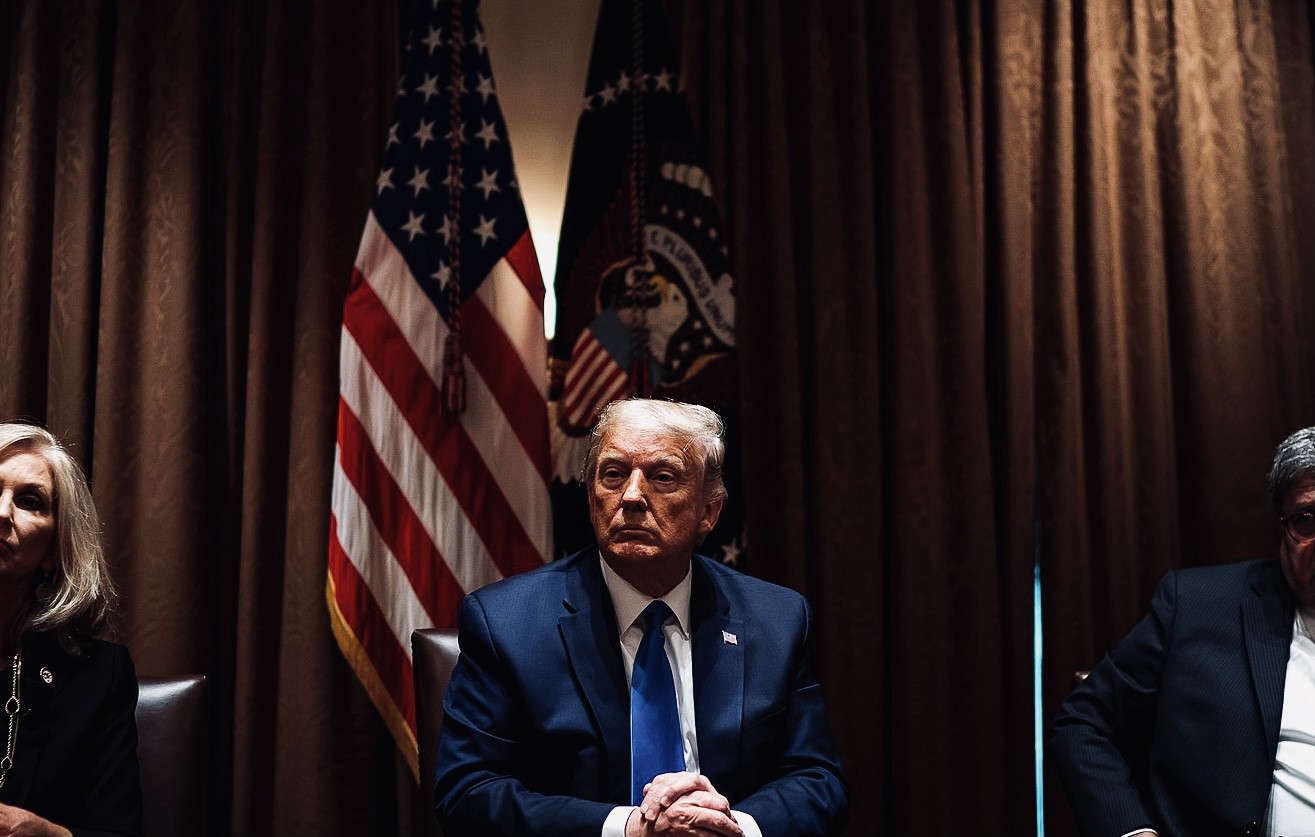

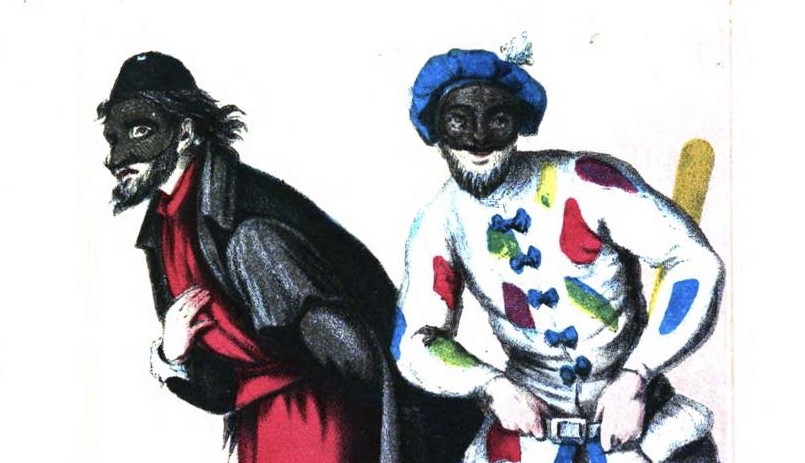
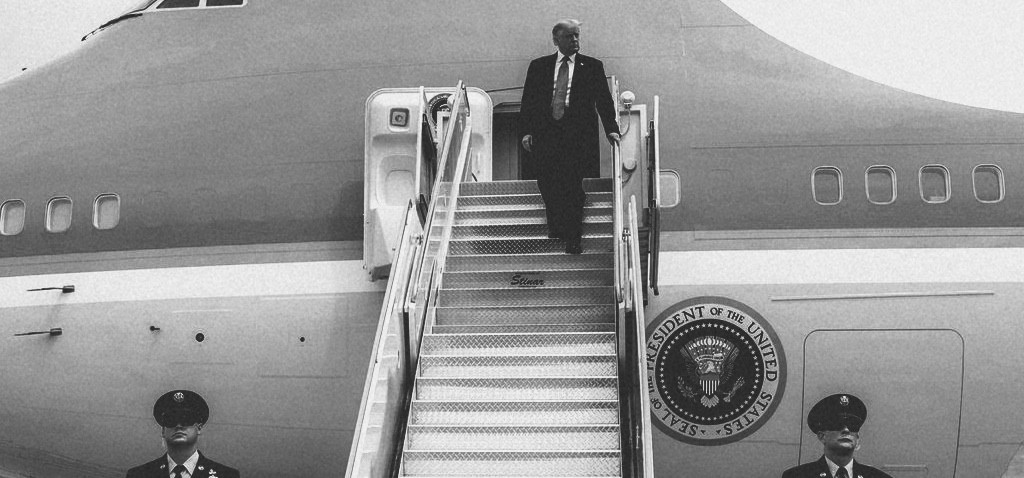
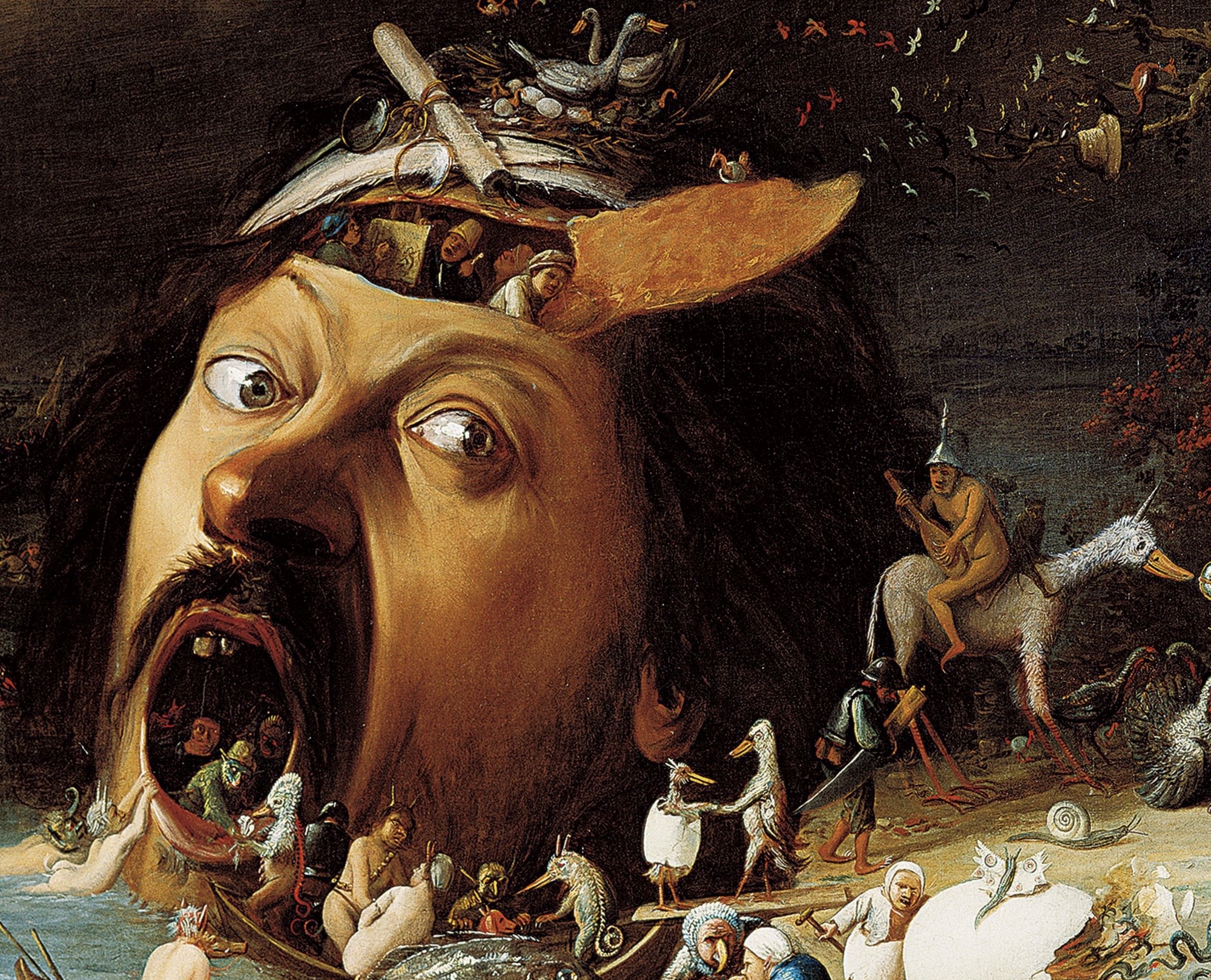
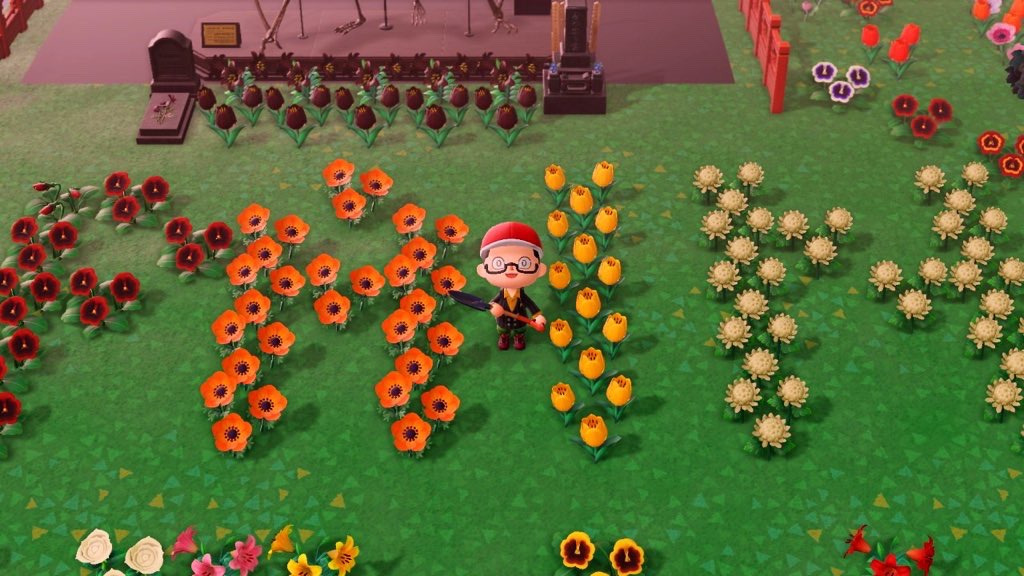


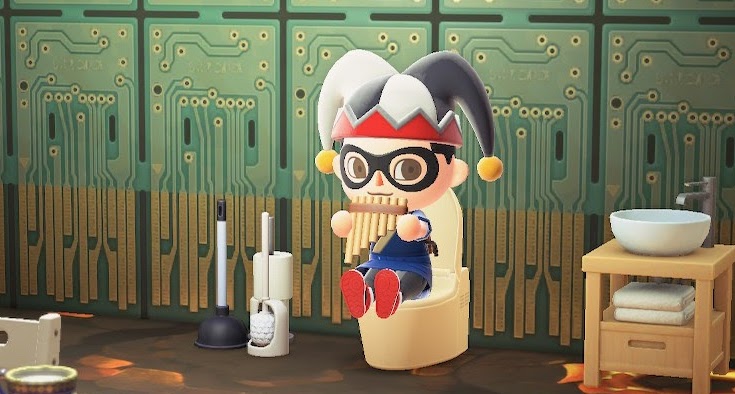
 pav dot quest