Tag: politics
-
Muscle Memory
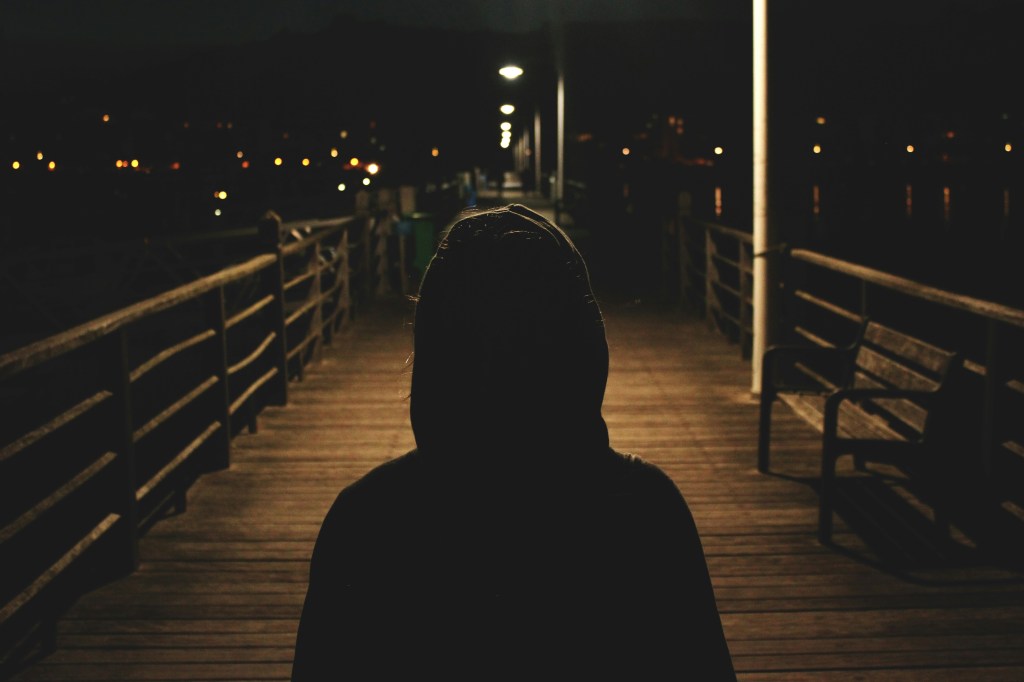
Photo by Paul Garaizar. It was the day after the election, and I was sobbing uncontrollably into my girlfriend’s shoulder as she held me. We had been walking through her living room when my emotions erupted, and had she not held me in that moment, I would have doubled over on the floor. The election results were—are—absolutely devastating, but that’s not why I was crying. Not in that moment, anyway. The idea that the majority of the electorate had affirmatively chosen to return Trump to the presidency was a reality that had only begun to truly assert itself upon us, our bewilderment and anxiety still to congealing into grief, fear, and a stinging sense of betrayal. My feelings about this cruel pivot in history isn’t what caused my meltdown in that moment, though it surely primed my nervous system for it.
Earlier that afternoon, my girlfriend Kristina and I were going about the day’s business in a kind of stunned reverie, sadness and tension permeating everything we did and said. Her mother had come over to help with some work in the yard. Kristina lives on an enormous plot of farmland, and she has big ambitions for what she might do with it. Only having lived there for about a year now, there is still a lot of work to be done, and just about all of it is going to be done by her and her family. Oh, and me too of course, here and there.
That day’s bit of drudgery was to move some logs from one part of the yard and into another. I don’t think I was told why, and it didn’t matter. I’m just there to help. Anyway, I’m an indoor cat with little experience or interest in, as the kids say, “touching grass,” but these did not seem to qualify as “logs” to me. They were about ten feet long and ten inches thick, which, to my mind, makes them not logs but trees. Trees that happened to be laying on the ground. In any case, they were very long logs, and they were also, well, waterlogged, so they were also very, very heavy. Now, Kristina and I are both capable of hauling heavy things around, but neither of us are what you’d call “buff.” Her mother is probably made of stronger stuff than both of us, but she’s in her 70s.
All three of us were a little taken aback by how heavy these damn things were, but we were determined. We made a valiant effort to move the first “log,” managing to carry it about 20 feet to its new location (again, I have no idea why), but as we lowered it to its resting place, I got a stab of pain in my back and we had to let the thing go more suddenly than we intended, which was fine.
I was not fine, though. The pain in my back wasn’t debilitating, but the suddenness of it exacerbated my already foul and tender emotional state. Backing away from the dropped log (tree), another shock of pain, this time in my right knee. Ever since my long bout with covid in early 2023, my knees have never been the same, and they often zap me with some sort of nerve pinch in the most benign of ambulatory circumstances, rendering me suddenly unable to walk. Yes, it really sucks!
And it sucked here too. My back pulled, a log dropped, and my knee buckling, I was doing all I could to keep my wits about me.
Kristina’s mom, absolutely trying to make me feel better about it all, said something like, “Well, we’re more used to this kind of work,” meaning that it makes sense to her that I’d more easily get hurt than her or Kristina, who both do this kind of stuff all the time—by choice!
But that’s not how I took it in that moment. I already felt embarrassed, and I took her mom’s gentle comment as a sort of attack, like she was pointing out what a sissy I am.
I didn’t respond to it that way, but I did limp back to the house in what probably appeared to be a hurried huff. But it wasn’t a huff. I couldn’t have expressed it in words at the time, but I was experiencing a kind of panic. I went inside the house and Kristina’s dog, having been left out of the all the fun the humans were obviously having outside, was desperate for attention and scampered into my path and fussed underfoot. It was too much for me and I yelled, in a crescendo, “Stop, stop, stop, stop, STOP!!!” I collapsed into a chair and sat with my heart pounding and my eyes as wide as dinner plates.
Kristina, with incredible patience and tenderness, sat with me and offered me love and comfort as best she could. I couldn’t look her in the eye or speak in anything more than curt single syllables. For what it’s worth, I used those syllables to convey that I sincerely appreciated what she was doing for me, that I was deeply sorry for being in this state, and that I was unable to make eye contact. I was, essentially, trapped, a temporary prisoner of my nervous system now in full fight-or-flight. She heard me and she understood.
Once I thought my emotions had sufficiently settled (they hadn’t), I got up from the chair and we walked into the living room. It was there that I explained to Kristina a part of what I thought had triggered me into what I now know was an attack of post-traumatic stress.
Late one night a little over 14 years ago, I was getting off the Metro stop at the Stadium-Armory station in Washington, D.C. I had recently quit my day job in political communications in order to try being a stay-at-home daddy to my son who was about 11 months old at the time. Instead of working a 9-to-5 in an office, I’d work nights and weekends at a retail store in Arlington. I had just finished my second day of training at the store and was returning home to my apartment where I lived with my wife at the time and our son.
It was probably 11:30 or so at night. I bounded up the stairs from the station and out into the open air, where a group of what I assume were teenagers were laughing and being rowdy. This was not uncommon, but they made me uncomfortable in the way that I always am when around a group of people who are loudly laughing about something to which I am not privy.
I started my walk home, just a couple of blocks from the stop, and about a quarter of the way there, I heard the sounds of very fast footfalls behind me. Before I could even think about what was happening, I had been struck extremely hard by something (a bat?) in the back of the head and I fell face first on the ground.
I was kicked and punched and beaten, over and over. My assailants demanded my wallet and phone without giving me the chance to produce them. When I tried to rise to give them what they wanted, they knocked me down again, stomping, kicking, hitting me with something. Eventually, my phone, wallet, and keys slid out of my pants pocket, and when they realized this, they grabbed my things and ran, leaving me on the ground.
After some period of time that I can’t remember, I managed to stand up. My glasses were gone and it was night, so I could barely see, but I did my best. I was so dizzy from the beatings that when I first tried to walk I veered and collapsed into someone’s fence. I righted myself and walked home. I pounded on our door, leaving streaks of blood. My wife, Jessica, opened the door and saw my battered face, and would later tell me what a trauma that sight alone had been, that I looked like I had come from a horror movie.
I have written about this event in more detail here. And obviously, I survived, though I certainly wasn’t confident of that at the time. I recovered at home, with Jessica’s diligent and tender care. Mostly I was shown incredible kindness, even by relative strangers—a local secular humanist group I had once spoken to sent a care package.
When relatives visited, though, I recall an awkwardness I couldn’t put my finger on. Looking back, it was almost like they were little afraid of me, like I might infect them with a mugging virus or something.
And then at least two men in our family said something like this to me: Well, if you knew some martial arts or had some self defense training, this might not have happened.
You can imagine how I took that.
If I hadn’t been such a coward, I could have dealt with my attackers. If I hadn’t been such a sissy, I could have fought back. But I’m small and weak, not enough of a man, and it was my own fault.
And I carried that, right along with the rest of the trauma of that night.
I had many years of therapy, and we took all of this head-on. Those men were really just making themselves feel better, my therapist assured me. They were projecting their own fear onto me, because they need to believe it can’t happen to them. I understood. I thought I had dealt with this. I thought I had moved on.
But that humiliation, that shame, was still deep inside me, packed as dense as a neutron star.
This is also about the election.
I had been cautiously optimistic about a Harris victory, but I knew that it was essentially a coin flip as to who would win. Fearing a second Trump presidency, I had been lightly researching what it was like in other countries with authoritarian governments. What kind of day-to-day life could we expect?
After the election, I asked my friend, the writer Emily Hauser, about this, correctly suspecting she’d have some insight. I asked her what she knew about life in autocracies, whether they still get to lead creative lives and enjoy art, whether they get to go out and be with friends, whether they can make newsletters and blogs and social media. “Can they live somewhat normally or is it all Stasi and Mad Forest Iliescu and internment camps?”
“On the one hand, yes, people keep making art and sharing useful information,” she replied. “On the other hand, people do those things but also know the constraints they’re working under and gradually (or in Russia’s case, all along) do those things within the framework of those constraints.”
“I also think it’s a good idea to remember that when Putin took over Russia, it was after the only decade in which the people in that region had anything remotely like democracy or the kinds of civil freedoms that you and I are used to,” she said. “They had no expectations or muscle memory of anything else, whereas we do. We won’t be Russia on January 21, if only for that reason. The question is how well Americans will use those muscle memories and that knowledge.”
This was quite enlightening for me, and even a little encouraging. (Not encouraging for Russians, mind you.)
Regardless of the actual realities of our relative liberties at any given time, Americans feel like they are a free people. We are used to at least being under the impression that we are free to live our lives and speak our minds as we wish. Put aside, for now, how some groups enjoy rights not enjoyed by another group, or how we are led to believe we are entirely masters of our own destinies when this is, generously, a major exaggeration. Be they MAGA-hat wearing Trump cultists or latte-sipping coastal elites, Americans identify as free. They live their lives and conduct their interactions with the rest of society as free people. If they do not perceive themselves to be free, they aspire and fight to be free. That’s our muscle memory. That gives me some hope, that as the right-wing vice tightens, that muscle will twitch and flex and resist.
Unlike me, on that night fourteen years ago, we will at least be able to see it coming.
In Kristina’s living room, on November 6, 2024, I told her that I knew I was overreacting to everything. I told her that her mom’s benign comment, about how I’m not used to this kind of farm work, had sort of reminded me of those admonitions from the men who told me I should have been able to fend off my attackers all those years ago. I was only about halfway through with the sentence explaining all of this when my emotions erupted, and Kristina had to catch me as I cried into her shoulder.
“They came up from behind me!” I shouted in between sobs. “They ran up behind me and hit me in the back of the head! They knocked me to the ground before I knew they were there!” Tears flowing, gasping for air as I cried, I was pleading with the world to forgive me, to excuse me for being beaten to a pulp on the street. I was trying to exorcise fourteen years of shame.
As I was being beaten to the ground on that awful night fourteen years ago, along with the extraordinary pain, I experienced feelings I knew quite well: the feeling of being small, revolting, unhuman. I felt the way I did throughout all the years of bullying and harassment I endured in middle and high school, the feeling I carry with me well into adulthood. I felt like the universe had caught me trying to pass myself off as normal, as a regular human, and now I was going to be punished. Again. When I was a kid, it was vicious mockery and public humiliation and as much physical violence as a bully could get away with. Three decades later, it was a merciless beating from two assailants whose faces I would never see. It was, in a way, familiar.
Donald Trump is a bully. He is the ur-bully, leading a movement fueled by cruelty. He and the Republican Party and the rightwing movement have vomited avalanches of lies and misinformation into the public consciousness, but there is one thing that neither Trump nor his followers have misled anyone about: that they are eager to use their power to hurt people, to take those who are already marginalized and in pain and shove their faces into the dirt. This is no mystery. This is no hidden agenda. This is their chief selling point, and the country is buying.
A majority of the electorate has not just sided with the bullies, like the onlookers who laugh as one kid mocks and beats up a smaller kid. My fellow Americans have declared that this is who we are. This is what they aspire to. The cruelty, as they say, is the point.
It is no wonder then, in the shock of this national betrayal, that this old wound of mine might reopen. My muscle memory is of living in a world dominated by those who actively sought my humiliation, who were fueled by my pain. That mugging fourteen years ago, though likely just another arbitrary criminal act of violence that could have happened to almost anyone, nonetheless felt—feels—like one more instantiation of that world. The election of Donald Trump by a firm majority of voters feels like that too.
My survival strategy, as a terrified kid in school and as an adult in the wider world, has been to shrink, to blend, and above all, to mask. That’s also my muscle memory.
I’ve also been doing the work, as they say. I’ve been training other muscles, striving to write and believe a new narrative for myself about who I am. Even though I entirely fell apart in Kristina’s arms, sobbing and arguing with phantoms, that act itself was a kind of unmasking, an exercising of new muscles. Because I wasn’t pretending to be okay. I wasn’t going along to get along. I wasn’t conceding to my own diminishment.
I was being exquisitely vulnerable, insisting on the truth, and being who and whatever I was in that moment, devastation and all. That, in itself, felt a little like being free.
That’s a memory too.
-
What If He Wins Again?
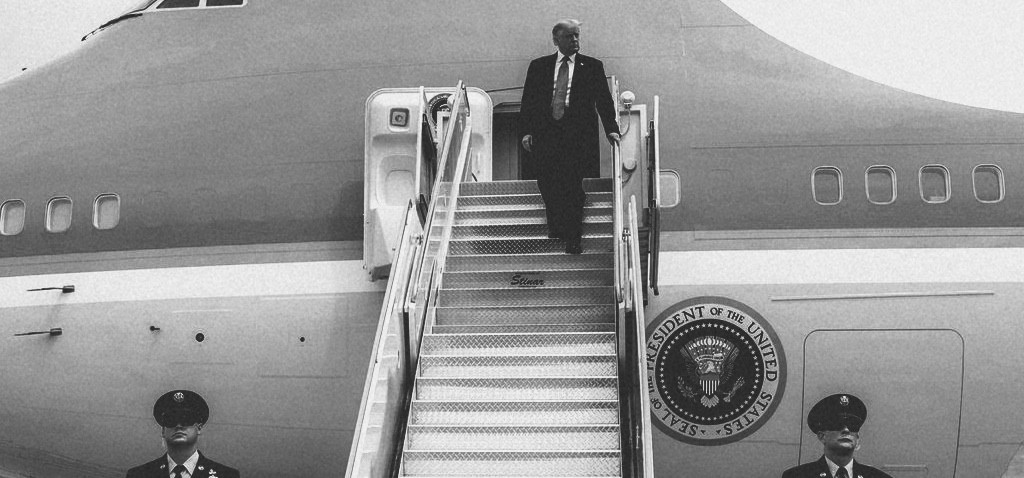
The tragic truth is that Donald Trump’s chances of being reelected are pretty good, considering the mass death, disease, disruption, and despair that he has wrought upon the electorate. Just as it was in 2016, FiveThirtyEight gives Trump about a 1-in-3 chance of pulling off another upset. And given his hamfisted moves to sabotage the election, I’d say it’s really a coin flip. Even a fist like a ham can pack quite a punch when it’s attached to the President of the United States.
If Trump does win, legitimately or not (and it would almost certainly be by Electoral College technicality), it will be perhaps the darkest moment in American history. Trump’s cultists will of course foam at the mouth as they bellow in atavistic triumph, but for everyone else, it will be a trauma of the highest order. If the results of 2016 were a gut punch to the nation, a Trump victory in 2020 will be a national evisceration. Tens of millions of us will be psychologically and emotionally crushed. Our already fragile hopes will have been utterly dashed. We’ll be terrified and vertiginously disoriented. Save for the MAGA partisans, the United States will be a nation in utter despair.
That’s one of the things that worries me most about Trump’s potential reelection, the pall of gloom that is sure to saturate the national psyche. Defeated and exhausted, too many of us will have lost the will the keep up the fight. I don’t know if there will ever again be free and fair elections in the United States if Trump wins, but there definitely won’t be if a second Trump term lays us all low. And then who will stop the third term, the fourth, and all the rest to come under Presidents Eric Trump, Ivanka Trump, and Donald the Second?
I can imagine the smallest silver lining to a Trump win in November, though. In a previous piece, I lamented the fact that the United States exists in a kind of quantum superstate, as two nations from different universes existing in the same physical space at the same time. Well, in the case of Trump securing a second term, I have to wonder if maybe that will spur the non-fascists of the country to finally take that hard look inside Schröedinger’s box and see for sure that the cat is, in fact, dead.
I lie awake at night worrying over the collaborators, quislings, and cowards that are enabling our transition to a Vichy state, but at the same time I find it almost impossible to imagine folks like, Andrew Cuomo, Gretchen Whitmer, or Gavin Newsome simply rolling over and accepting the new fascist order under Dear Leader Trump. I definitely can’t imagine my own state’s governor, Janet Mills, just shrugging and falling in line. There will be plenty of spineless Members of the House and Senate who will try to stay afloat and play both sides, not to mention the countless both-sidesers in the political-media class, but some definitely will not.
What I’m getting at is that a Trump win might finally snap some of the restraints that have lashed the reality-based states to the fascist-fundamentalist ones. Maybe the establishment of a gold-toilet kleptocracy will cause a few center-left leaders to flip the metaphorical table over and yell, “Fuck this shit!” Metaphorically.
What I’m wondering is, after a demoralizing Trump win, after we’ve recovered from the immediate emotional shock and trauma, and after we’ve gathered up our spilling viscera and shoved it back into our abdomens, whether we might decide that, dammit, we just don’t have to play this stupid game anymore. We don’t have to jerk around with the Nation of Fanatical Ignoramuses anymore. We can acknowledge that the relationship among these 50 states and various territories is just not working out, and that we can do better. We deserve better.
And we can walk.
-
If Trump Goes Down
Before we get too excited about what could befall President Trump as a result of this or that high crime and/or misdemeanor, I thought I’d run down a few things that might be useful to keep in mind.
Presumably, what many folks are hoping for is the impeachment of Trump and his removal from office. I share this desire to see him removed, of course, but as satisfying as his ultimate defeat and humiliation would be, there will also be unpleasant consequences.
Obviously, I’m talking about the presidency of Mike Pence. I am more or less certain that Pence would be a preferable president to Trump, if for no other reason than Pence is not a demented man-child.
But of course it also means that Pence will be far more competent in the execution of a horribly destructive right-wing agenda. Whereas Trump was happy to roll over for religious conservatives, President Pence will be the thick-necked, silver-haired paladin to usher in Revelation. Establish the Republic of Gilead, in which all the rich white dudes are now “commanders” and women are incubators.
Oh, and the cabinet. What might we expect? Say, Attorney General Ted Cruz? Education Secretary Jerry Falwell Jr.? Defense Secretary Jerry Boykin? Secretary of State John Bolton?
Vice President Mike Fucking Huckabee.
I assume Scott Pruitt stays.
And you’re likely wondering, where’s Sarah Palin?
President Mike Pence can’t abide women in his cabinet, because First Lady Karen Pence can’t be there all the time.
But hey, you think, there’s no way President Pence, forever stained by the scandal of Trump, could survive a general election against a half-acceptable Democrat.
You sure?
The closest analogue to this we have is Gerald Ford taking over for Nixon after his resignation. President Ford, of course, lost his bid for election. But not by much, and had the election happened a week or so later, it’s an even chance he would have won. It’s not a given that a destroyed administration’s back-up president is a sure bet for defeat. The silver lining to that example is that Ford was by all accounts a good and decent man, and had he won, it’s not as though much would have changed or gone off the rails.
Mike Pence is not a good and decent man, but boy does he play the hell out of one on TV. Ford, basically a good egg, couldn’t convince a sufficient percentage of voters of his good-egg-ness. Pence, a sinister, opportunistic fanatic, comes across on TV as sane, stable, comforting, and fatherly. If Trump could con enough of us to squeeze him into office, do you think the far more presentable Pence couldn’t?
And all of this is just what could happen if Trump is successfully removed from office. But it could also be that a great deal of political capitol is spent on trying to oust him, and it never takes. His base of support never wavers, Republicans in Congress remain loyal, and the public grows tired of hearing from perpetually-outraged Democrats.
This is not an argument against impeachment. Trump is dangerous in countless ways, a genuine existential threat to the country and the world. President Pence would also be a threat, but at least in ways that we can count on one or two hands. There’s a playbook for dealing with him and his type. Trump is something else.
But I also think there’s something to be said for toughing out the next three and a half years, containing Trump’s damage and allowing his idiocy to wear thin the patience of the electorate. Democrats gain in the midterms, perhaps winning one of the two houses of Congress, effectively shutting down any of Trump’s legislative goals. And in 2020 a competent Democrat can, hopefully, defeat him fair and square.
Of course, he could win then too.
So, yeah. Alright. Impeach the fucker. We’ll take on the commander next.
Please consider supporting my work through Patreon.
-
Peak Outrage and the Exhausted Amygdala
Why have I lost interest in politics, when it was once such a passion of mine that I left theatre and performing Shakespeare for a living to pursue it? John Dickerson gets it. In a piece about the titanic clusterfuck that is the VA, he writes:
One primary reason to despair is that we’re already living at peak outrage. Fake umbrage taking and outrage production are our most plentiful political products, not legislation and certainly not interesting solutions to complicated issues. We are in a new political season, too—that means an extra dose of hot, high stakes outrage over the slightest thing that might move votes. How does something get recognized as beyond the pale when we live beyond the pale?
This is of a piece with the utter lack of a generosity of spirit from even the most well-meaning progressives out there, who have been socialized to salivate at the prospect of uncovering the heretics in their midst, taking as much pleasure in sicking the mob on the perceived transgressions of fellow liberals as they do in substantive policy wins. How can you be truly moved to tackle problems like Veterans Affairs, climate change, or the Boschian hellscape of our prison system, when you’re consumed by your fury over Alec Baldwin on Stephen Colbert?
More Dickerson:
As FDR said, the public cannot “be attuned for long periods of time to a constant repetition of the highest note on the scale.” If we are constantly yelling outrage, it leaves us with nothing when the real thing comes along.
True, but perhaps even worse, the constant repetition of outrage I suspect trains our lizard brains to be in a constant state of threat. Our collective amygdalae are pumping out fight-or-flight chemicals at such a rate, that either everything looks like an equally existential threat or unpardonable offense, or we become exhausted, and cease to care about much at all.
For myself, I have to wonder, now that I’ve passed both of these stages, is there any coming back?
-
The Loudest Voice is a Bawling Baby
…these days Fox News is the loudest voice in the room only in the sense that a bawling baby is the loudest voice in the room. In being so easily bullied by Fox’s childish provocations, the left gives the network the attention on which it thrives and hands it power that it otherwise has lost.
And this is largely why I don’t watch The Daily Show or shows on MSNBC anymore. We get it, Fox is full of backward morons. They’re the Westboro Baptist Church of media. They love it when you waste your time hating them.
It’s part of a larger problem, like what can make Twitter so tiring — the constant, frenetic need to be offended or feel bullied by someone, and the high horse one gets to climb when they call it out.
Don’t feed the trolls, whatever their form. Don’t read the comments. Rein in the snark. Get a grip, and pick the battles that are actually worth fighting.
-
Shattering My Dreams of Disunion
A piece in The Economist argues that despite popular fatigue with our country’s countless foreign entanglements, Americans ought to appreciate those entanglements, which enable us to maintain our world primacy, and therefore our ability to enormously influence the workings of the world to our advantage.
I am sympathetic to this position. I take solace that it is currently we who are calling many of the global shots and not some other superstates, on the ascent as they may be.
But when I think this way, when I’m expressing a preference for the primacy of American values around the world, I admit, I’m not thinking about a great deal of what makes up America. I’m not thinking about Texas or Florida or Louisiana. I’m thinking about myversion of American values; progressive, with a strong emphasis on human rights. I’m thinking about “Blue America.”
So this gets tricky for me. Here’s one of the qualities the author of the Economist piece in question notes as a key factor in our
First is geography. Being self-contained makes America secure, whereas all other great powers have had to defend themselves against their neighbours. Even Britain at the height of empire in the 19th century was repeatedly distracted by the need to stop any one country dominating continental Europe. By contrast, America has friends to the north and south and fish to the east and west. Europeans warily eyeing nearby Russia, or Asians fearful of China, can ask Americans for help, safe in the knowledge that they have a home to go back to on the other side of the world.
This is very Germs-Guns-and-Steel-esque, ascribing geopolitical destiny in large part to geography, both in terms of location and land shape. And it makes perfect sense.
But here’s the thing. I have suggested, rather earnestly, that the United States would be far better off if it were not so damned united anymore. Rather, I’ve preferred the idea of smaller North American nations that better suit the increasingly-disparate ideologies of the various regions. So, for example, you’d have New England as one country, Texas as its own nation, etcetera, all trading and cooperating, but no longer bound by the same central power, and therefore able to get more done without haggling with polities with few shared interests.
If I got my way, though, there go the fruits of geography. Poor, naive New England or the tiny-yet-dense nation of New Amsterdam (which is what I’m now calling the nation-state of New York City) would be suddenly vulnerable to the potential aggressions of The Old South or what have you. Far-right representatives now commonly sent to Washington have already shown themselves to be more than happy to destabilize the global economy on a whim, and they tend to hail from those gun and machismo-worshipping regions that might be more inclined to threaten their neighbors. Given the power of an independent nation with a military of its own, who’s to say they wouldn’t behave just as irrationally and dangerously?
So not only is a unified, centrally-governed United States good for geopolitics, but it may also be the only thing standing between a secure New England and an army of ornery Texans marching on Boston. I’m probably exaggerating the potential for all-out armed conflict, but it does throw a wrench in my fantasy.
-
Instead of Smaller Government, Let’s Elect Fewer Assholes
Ilya Somin kind of blew my mind with this piece at Cato’s website, and it briefly shook my belief in a strong central government. Briefly! Ever so briefly.
What I think Somin gets right is the diagnosis of a particular problem: voters’ abysmal political ignorance. No matter how much smarter we as a society might get, no matter how much more information is instantly available to us, we are still grotesquely stupid when it comes to government and politics, with no signs of improvement.
Somin refers to this as a “rational ignorance,” because there’s no way a sane person with other things on his or her mind like careers and families and pets and hobbies and whatnot could ever fully grok what the hell is going on.
So Somin posits that what would induce more rational engagement would be “foot voting” as opposed to “ballot voting,” or making one’s positions clear and affecting change by relocating to places where policies are more favorable, just as one patronizes businesses one gets better service or products from. Of course that sounds nutzo, until you see where he’s going: you can foot-vote if the jurisdiction is small enough that leaving it is not the end of the world. In other words, more decentralization and more hyper-localization of government.
Somin:
The key difference between foot voting and ballot box voting is that foot voters don’t have the same incentive to be rationally ignorant as ballot box voters do. In fact, they have strong incentives to seek out useful information. They also have much better incentives to objectively evaluate what they do learn. Unlike political fans, foot voters know they will pay a real price if they do a poor job of evaluating the information they get.
“Political fans” are people like me, who love politics as a sport or drama, and follow the characters, but don’t necessarily know everything about policy (even though we one think we do).
More Somin:
The informational advantages of foot voting over ballot box voting strengthen the case for limiting and decentralizing government. The more decentralized government is, the more issues can be decided through foot voting. It is usually much easier to vote with your feet against a local government than a state government, and much easier to do it against a state than against the federal government. . . .
Reducing the size of government could also alleviate the problem of ignorance by making it easier for rationally ignorant voters to monitor its activities. A smaller, less complicated government is easier to keep track of.
Somin dismisses it as a solution, but this gets at the very beauty, and absolute necessity, of representation. Rather than needing to understand all policy minutiae, which I never could anyway, I get to choose someone to represent me and my interests. To do so, I can use things like party affiliation, history in office (if there is one), and statements of principles, as well as things like evaluations of character and integrity, to guide my choice. They are, as Somin points out, shortcuts, but they will do. They will have to!
And this applies to the micro as well as the macro level. Of course I can’t be expected to know all the ins and outs of the behemoth federal government and all its tentacles and tributaries of tentacles. So of course I need to choose someone to represent me. But nor can I seriously be expected to grasp all the workings of my municipality or congressional district. Budgets, education, public works, city management and countless other aspects of local government make it equally as daunting as the federal. (Perhaps it is not literally as complex, but if I could stand next to a moon and then next to a planet, they’d both seem impossibly big and have roughly the same effect on my sense of awe.)
I work a full time job and I have two small children. My job is intellectually rigorous, and demands an awful lot of processing power throughout the day. Even if all government were decentralized to some radically tiny, libertarian-pleasing level, it’d still be too much for me to fully grasp.
And that’s why we have a shorthand, known as representatives. We just have to do our best in choosing them, and hope we don’t pick a bunch of assholes, as we so often (usually?) do. Instead of slicing up the government and polity into bite size pieces, which won’t help anyway, and only lead to general provincialization and the dilution of federal rights, let’s try to get better at picking our stand-ins. Fewer assholes. As a “political fan,” I can make that effort, at least.
-
The Facts, Not in the Flow
. . . I have long believed that the real job of journalism is to add value to what a community knows — real value in the form of confirmation and debunking and context and explanation and most of all reporting to ask the questions and get the answers — the facts — that aren’t already in the flow. The journalist’s and journalism organization’s ability to do that depends on trust over traffic.
NBC’s Chuck Todd, responding to criticism that the news media has not corrected the rampant, cynical proliferation of misinformation about the Affordable Care Act:
What I always love is people say, ‘Well, it’s you folks’ fault in the media.’ No, it’s the President of the United States’ fault for not selling it.”
You see the problem here.
(The Jarvis quote is not a response to the Todd quote, it’s a reaction to a different circumstance entirely, but they sure attached themselves to each other in my mind.)
I mean, it’s a law on the books, right? The idea that it is not journalists’ responsibility to report what’s true, but simply to narrate a rhetorical contest, well, it’s nauseating. We can’t tell you the truth because one party in the battle is poor at marketing? Really?
It’s no wonder we’re as deeply un- and misinformed as we are.
-
Propagating Virtue Through Use (Or, Humanism as Inexhaustible Doritos)
A little while ago I posted about Claude S. Fischer’s piece exploring the phenomena of sympathy, and how our “moral circle” has expanded over time to allow us to feel sympathy or grief for the misfortunes of strangers and foreigners (in all senses of the word), and, incidentally, how at least in the West a fetishization of “public grieving” (or as I termed it, “garment rending”) developed, even over losses not directly our own.
Hemant Mehta pointed me to a piece by JP O’Malley in The Rationalist about American philosopher Michael Sandel. The gist of the piece is to show how Sandel has some refreshing ideas about balancing markets and more ephemeral democratic virtues, and how Sandel as a personality may be in danger of being co-opted by politicians who want to look like they have a heart while they sink the knife into yours.
First off, I appreciated how Sandel says that Western societies seem to have such faith in markets that we have all given up a great deal of what makes our democracies democratic; in ceding authority to the invisible hand, we leave little else to discuss or debate — what’s left to be democratic about? The market will sort it out. It sounds a whole lot like religion.
Anyway, that’s not the call-back to the Fischer piece though. It’s about treating each other and ourselves as more than consumers:
. . . in Sandel’s view, the freedom argument [in favor of markets] is taken too far by libertarians and laissez-faire economists. “Market freedom refers to our freedom as consumers, but not as citizens, and not as full human beings. Our identity as consumers is only part of who we are. And if we allow our identity [as consumers] to dominate, then we miss out on important aspects of freedom to do with individual self-development and citizenship.”
[. . . said Sandel,] “There are some economists who make the argument that human beings should rely as much on possible on self-interest and as little as possible on altruism, solidarity or civic virtue. These economists seem to think that positive virtues are fixed in quantity, that they are like fossil fuels: the more you use, the less you have. But for me Aristotle is closer to the truth. There is not a finite supply of virtues, as if they were commodities. Aristotle says that we learn to become brave by acting courageously, and that we learn to care for the common good by engaging in civic acts and civic responsibility. These virtues are cultivated through practice.”
There’s that word: “cultivate.” (And not incidentally, “practice.”) Being kind and compassionate to each other, the choice to show sympathy in the sense of recognizing common humanity in everyone as a default, is something that is not in short supply, nor in any supply. It is a practice that can be cultivated. The very act of embodying virtues like sympathy and compassion for those from, say, different countries or economic classes, or even virtues like democratic deliberation, further propagate them through use.
An excellently-crafted musical instrument must be played to remain in fine condition, and indeed, to improve and “season”. It doesn’t “run out” of songs or notes. So it is with a democratic society. Democracy and humanism must be practiced so that we can have more and better democracy and humanism.
Or as Jay Leno used to say in those 1980s Doritos ads, “Crunch all you want; we’ll make more.”
-
The Approval of the Civilized World
Stephen Fry says Russia’s treatment of gays and lesbians must have international consequences. In an eloquent and moving post, he declares:
An absolute ban on the Russian Winter Olympics of 2014 on Sochi is simply essential. Stage them elsewhere in Utah, Lillyhammer, anywhere you like. At all costs Putin cannot be seen to have the approval of the civilised world.
Meanwhile, Obama is asked about a potential boycott by the U.S., and he responds:
We’ve got a bunch of Americans out there who are training hard who are doing everything they can to succeed. Nobody’s more offended than me about some of the anti-gay and lesbian legislation that you’ve been seeing in Russia. But as I said just this week, I’ve spoken out about that not just with respect to Russia but with a number of other countries, where we continue to do work with them but we have a strong disagreement on this issue.
One thing I’m really looking forward to is maybe some gay and lesbian athletes bringing home the gold or silver or bronze, which i think would go a long way in rejecting the kind of attitudes were seeing there. And if Russia doesn’t have gay or lesbian athletes, it’ll probably make their team weaker.
No, who wins is not the point. At all. Let Russia bring its gay-free team to lose in Lillehammer, if that’s all that matters. But bringing home medals is not a “response” — it does not rise to the level of gravity warranted by Putin’s bullying, opportunistic thug-state and the message a proposed boycott is intended to send.
I’m often disappointed by the president. I’m often inspired by him. And I am willing to hear meaningful, reasoned arguments in favor of participation in these Olympics. But his flip, dismissive attitude toward what is a legitimate and serious proposition is extremely dismaying.
-
It’s American to Welcome the Weirdos
In a previous post, I mentioned how Emily Hauser directed me to a revelatory article on introversion by Jonathan Rauch. One of the things I like about that piece is that it says to the planet-dominating extroverts, hey guys, it simply can’t just be about you. We have to figure out how we’re all going to be okay together (and in the Rauch piece, specifically it was about how intros and extros can get along in a relationship).
Maybe that’s what spurred Emily to write this, but it’s not mentioned. Either way, it feels really related: the idea that part of the very core of “America the concept” is that we take all kinds, and we strive to find ways to intertwine without getting tangled:
What we’ve been saying for the last six decades, with more and more people listening as the years fly and crawl by, is that all of this belongs to all of us. We all get to say what society is and does. We all get to set and then move the boundaries of what’s ok. We are — all of us, even (often) the straight, white dudes — rethinking and reshaping the social compact itself.
This strikes me as a fundamentally American thing to do — wasn’t Independence the breaking of one compact to build something new? Isn’t our very Idea rooted in an ever-expanding circle of rights and interconnected responsibilities? Our system is flawed, positively riddled with imperfections, but it’s structured to allow us to continuously fix those flaws. It’s fundamentally American to do so.
Now, introverts don’t need a civil rights movement, per se, we’re not oppressed. But we are dampened, and much of that is our own fault. I mean, we’re introverts after all! I guess what I’m saying, and what I see reflected in Emily’s writing here, is that there are many ways in which a dominant group can — even unwittingly — shut out another group, and that the onus is on all of us to correct that. And that’s whether we’re talking about politics and civil rights, or if we’re talking about one-on-one relationships and day-to-day, mundane interations.
One’s decibel level and quantity of communiqués should not determine one’s value to society, culture, the workplace, or within a relationship.
This is the work we do concerning the traits that continue to roil society and separate us (race, gender, sexual orientation, able-ness, religion, etc.), and thereby demand social and political change to bring things closer to fairness, to equalibrium.Here’s an example of an “other” on the more subtle scale, not “oppressed” in the political sense. It’s been within my lifetime that being a “geek” was without question something to downplay, a label you did not want, but we saw what this “type” of person was capable of (in technology and the creative arts), and now it’s becoming a badge of honor. Most people didn’t want “geeks” around, seeing them as universally risible. Not anymore. We’re bringing them in, culturally, but it took the work on their part first to show their value, to claim social territory.
And this is an American thing to do, to recognize and foster the potential value of all types of people, seeing their difference from ourselves as a benefit — and it’s also probably an American “bootstrappy” thing to do to put a lot of the responsibility on the “others”. Even though we have failed and continue to fail in so many ways to live up to “The Idea,” and indeed the very folks who came up with The Idea failed too, we’ll keep trying.
So listen up, normals. Be nice to the weirdos in your life. Your country needs you.
-
Threats, Trade-offs, and a Tinderbox
Pratap Bhanu Mehta at the Financial Times compares American perceptions of threat and the liberty-security balance, which leads me to contemplate an unpleasant state of affairs coming our way. Mehta says:
How do societies draw the line on what constitutes an acceptable trade-off? The American debate is peculiar because the standards seem perversely different in different contexts. By all accounts, gun violence kills upwards of 20,000 people a year in the US – yet the trade-off between security and the right to bear arms seems doggedly to ignore considerations that would make society safe.
This is because we have a gun lobby that has taken an already machismo- and paranoia-prone constituency and convinced it that these guns are not a safety problem, but a safety solution. This is, of course, so they will buy more and more guns and make the manufacturers, represented by that lobby, richer. Simple.
Meanwhile, most Americans aren’t interested in the whole PRISM-spying thing. To Mehta, this constitutes consent from our society for the whole enterprise. Mostly true I think. He says:
[M]any would argue – though this is debatable – that casualties from terrorist violence have been limited because a full measure of methods have been used against it. But even if we accept these arguments at face value, is there something more going on? Why would a society so willing to ignore security in one domain embrace it so uncompromisingly in another? Is it merely because an exaggerated threat of the foreigner makes it easier to immobilise other considerations?
You have to understand exactly who the American people feel threatened by. Yes, they feel threatened by “terrorists,” but many also feel threatened by each other and their own government. Think of it; here we have a situation where most Americans don’t know or care about the NSA situation, largely because they fear terrorism.
But how’s this for a tinderbox: for those who are upset about the NSA, they have new reason to fear the government. These folks also overlap, I’d presume, very much with those who the gun lobby has convinced are under threat by, who else, the government–and minorities. And OMG! Both the government and minorities come together in the form of Obama!
Stock your bunkers, folks. Things might get uglier before the apathetic urbanite and mainstream Americans have any idea what’s going on.
-
We Asked for This
The NSA snooping story is fishy. Here’s Ed Bott at ZDNet:
. . . a funny thing happened the next morning. If you followed the link to [The Washington Post‘s] story, you found a completely different story, nearly twice as long, with a slightly different headline. The new story wasn’t just expanded; it had been stripped of key details, with no acknowledgment of the changes. That updated version, time-stamped at 8:51 AM on June 7, backed off from key details in the original story.
Crucially, the Post removed the “knowingly participated” language and also scrubbed a reference to the program as being “highly classified.” In addition, a detail in the opening graf that claimed the NSA could “track a person’s movements and contacts over time” was changed to read simply “track foreign targets.”
David Simon, meanwhile, gauges the reaction:
You would think that the government was listening in to the secrets of 200 million Americans from the reaction and the hyperbole being tossed about. And you would think that rather than a legal court order which is an inevitable consequence of legislation that we drafted and passed, something illegal had been discovered to the government’s shame.
Nope. Nothing of the kind.
And how is that then? It appears that an already-existing, already-controversial program has been given a Hollywood style treatment. Bott again:
The real story appears to be much less controversial than the original alarming accusations. All of the companies involved have established legal procedures to respond to warrants from a law enforcement agency or a court. None of them appear to be participating with widespread surveillance.
So what went wrong with the Post?
The biggest problem was that the Post took a leaked PowerPoint presentation from a single anonymous source and leaped to conclusions without supporting evidence.
And now back to Simon, who tries to put things into sane perspective, reminding us that the collection of call records and the scraping of emails is not the same as surveillance and recording, if for no other reason than that there’s not enough human and computer power to take on such a massive task.
There is a lot of authoritarian overreach in American society, both from the drug war and the war on terror.
But those planes really did hit those buildings. And that bomb did indeed blow up at the finish line of the Boston marathon. And we really are in a continuing, low-intensity, high-risk conflict with a diffuse, committed and ideologically-motivated enemy. And for a moment, just imagine how much bloviating would be wafting across our political spectrum if, in the wake of an incident of domestic terrorism, an American president and his administration had failed to take full advantage of the existing telephonic data to do what is possible to find those needles in the haystacks. After all, we as a people, through our elected representatives, drafted and passed FISA and the Patriot Act and what has been done here, with Verizon and assuredly with other carriers, is possible under that legislation. . . We asked for this. We did so because we measured the reach and possible overreach of law enforcement against the risks of terrorism and made a conscious choice.
Simon does acknowledge in a later post that there is a substantive difference between the Verizon phone records being given to the government, and the kind of monitoring that PRISM does to Internet activity, which requires more oversight than it currently has. But this is still not really news.
I’m trying to keep my own apathy about this in check, as I imagine what my reaction would be if there were a Republican administration running the executive. I assume I’d be presuming guilt and nefarious intent. I hope the fact that I am far less freaked out by the current administration running such an operation (which, again, turns out to be nothing new anyway) will inform and mitigate any future knee-jerks.
We simply can’t each have ubiquitous presence and expression on the Internet and also expect airtight privacy for all of our activity. We just can’t. As Simon says:
We want cake, we want to eat it, and we want to stay skinny and never puke up a thing. Of course we do.
Of course we do. So let’s pick which one is more important to us, or more accurately, let’s adjust the dials to the mix of privacy and security that better suits us — based on what this thing actually is, not simply as it’s portrayed. We asked for this, and maybe we don’t like what we got. So let’s ask for something else.
-
Syria, Us, and Nothing
For the sake of my own sanity, I don’t keep up with the day to day developments of the world’s centers of crisis. Syria, however, holds a special fascination for me, given how stark and seemingly clear the lines of conflict are (as opposed to, say, the moral muddles of Iraq and Afghanistan). But the more I read, the more I despair, because it seems Syria’s battle lines are perhaps even more crooked than anywhere else the U.S. might consider involving itself.
Patrick Cockburn at the London Review of Books tells us that, for one, things have not been going the way they were once believed to be:
Assad isn’t going to win a total victory, but the opposition isn’t anywhere close to overthrowing him either. This is worth stressing because Western politicians and journalists so frequently take it for granted that the regime is entering its last days. A justification for the British and French argument that the EU embargo on arms deliveries to the rebels should be lifted – a plan first mooted in March but strongly opposed by other EU members – is that these extra weapons will finally tip the balance decisively against Assad. The evidence from Syria itself is that more weapons will simply mean more dead and wounded.
So by helping, we may be hurting. Sounds familiar. And the more confounding question may be how we could possibly help when it’s not clear what, exactly, we’d be trying to solve. Look at this clustercuss of conflicting interests:
Five distinct conflicts have become tangled together in Syria: a popular uprising against a dictatorship which is also a sectarian battle between Sunnis and the Alawite sect; a regional struggle between Shia and Sunni which is also a decades-old conflict between an Iranian-led grouping and Iran’s traditional enemies, notably the US and Saudi Arabia. Finally, at another level, there is a reborn Cold War confrontation: Russia and China v. the West. The conflict is full of unexpected and absurd contradictions, such as a purportedly democratic and secular Syrian opposition being funded by the absolute monarchies of the Gulf who are also fundamentalist Sunnis.
Okay, so what ought we do, then? Taking into account our experiences in Iraq, Afghanistan, and Libya, here’s the advice of David Bromwich at NYRB:
The day of the Boston Marathon bombings saw seventy-five killed in Iraq, and 356 wounded: just one story, which few Americans will have read, out of dozens about the aftermath of the American occupation. Our rehearsals of our own good intentions, in Iraq, in Afghanistan, in Libya, and now in Syria, have swollen to the shape of a rationalized addiction. What then should the US do? Nothing, until we can do something good.
Oh, good.
 pav dot quest